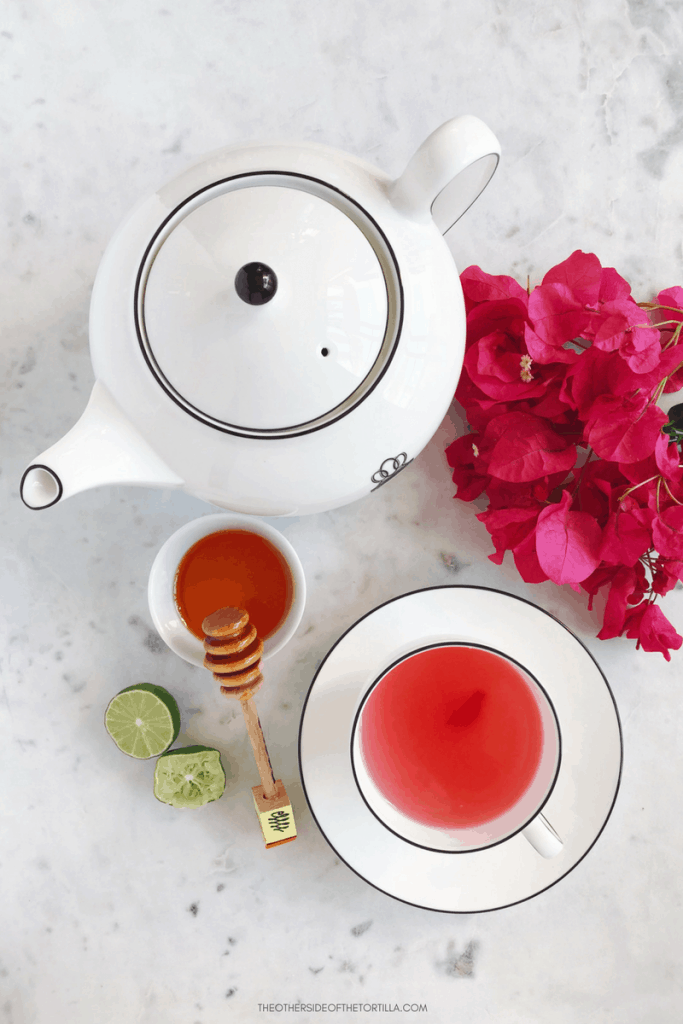
Mexican pan dulce can encompass pastries, sweet breads and even cookies, and are typically purchased from a panadería, or bakery. Popular kinds of pan dulce that you're probably familiar with may include varieties such as conchas, sweet empanadas, cuernos, and puerquitos or marranitos.
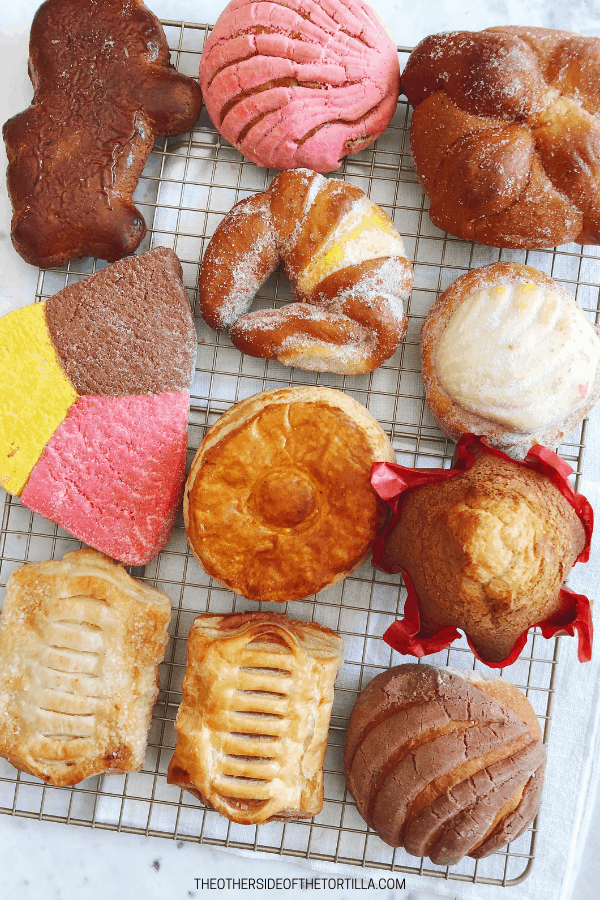
Bread and pan dulce first came to be in Mexico after wheat was introduced to the country by the Spanish conquistadors in the early 16th Century. However, Mexican pan dulce as we know it today rose to popularity during the French occupation in the mid 1800s.
French influence on Mexico’s gastronomy grew exponentially from the time Porfirio Díaz, a Francophile, took control as president in 1880 and flourished into the early 1900s. And although the French occupation of Mexico ended in the mid-1860s, they left behind an indelible impression when it came to Mexicans' palate for sweet breads and baking techniques.
French pastries and sweet breads adopted by Mexico morphed into uniquely Mexican creations, with a variety of shapes, textures and creative names—some of which still exist today. In fact, scholars estimate there may be as many as 2,000 different types of pan dulce in Mexico.
Below you'll find an alphabetical listing of common types of Mexican pan dulce, as well as some that are found only regionally. This list is not comprehensive by any means (there are hundreds of types of pan dulce throughout Mexico, and some are known by different names in different regions). If there's a type of pan dulce missing from my list that you'd like to know more about, please drop me a comment here on the blog, and I'll happily research and add your favorite pan dulce to the list!
Mexican pan dulce from A to Z
A
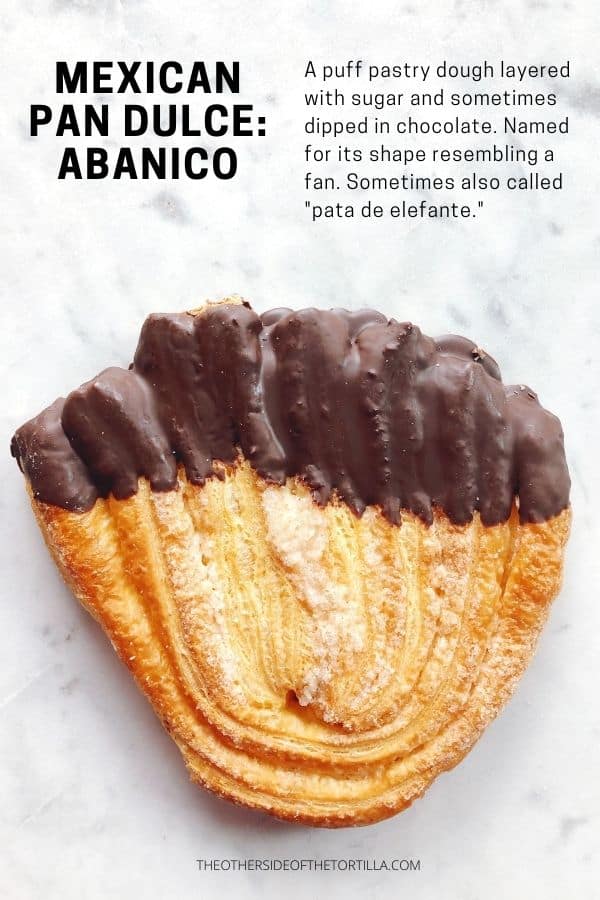
Abanico: Similar to the oreja or palmera, the abanico is a puff pastry dough layered with sugar and shaped in the form of a fan. It can sometimes be called "pata de elefante" which means elephant's foot. Some bakeries will dip the ends in chocolate, while others leave it plain.
B
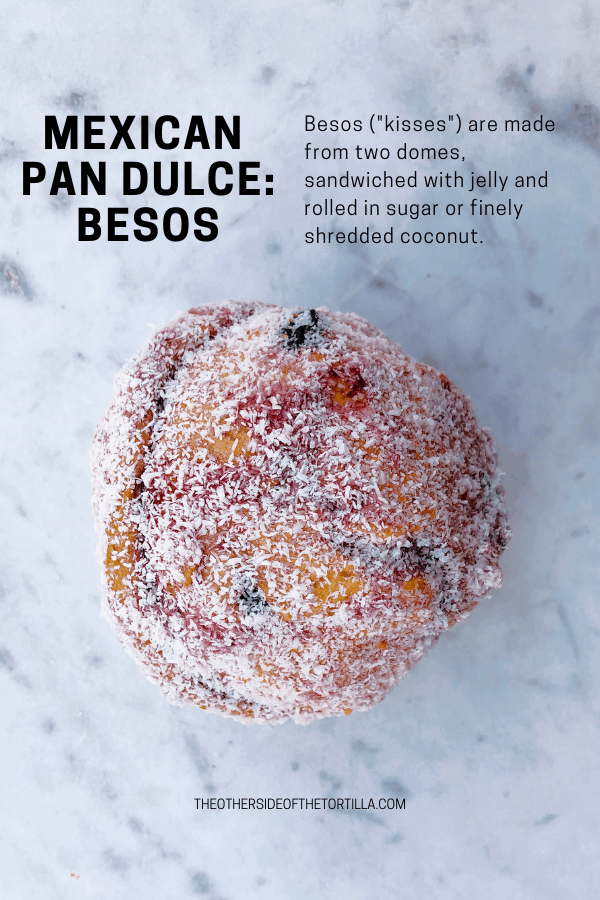
Beso: Made from a raised dough, the baker makes two spheres with it, bakes, joins them using a jam or jelly, and covers them with butter and powdered sugar. It owes its name to the figurative kiss between the two pieces or spheres. It can be found mostly in the central part of Mexico. The version pictured here is rolled in finely shredded coconut.
Banderilla: Made from buttery puff pastry dough, this crunchy, flaky treat takes its name from the daggers used during the second third of a bullfight. It’s finished with egg whites and sugar, which caramelize during baking.
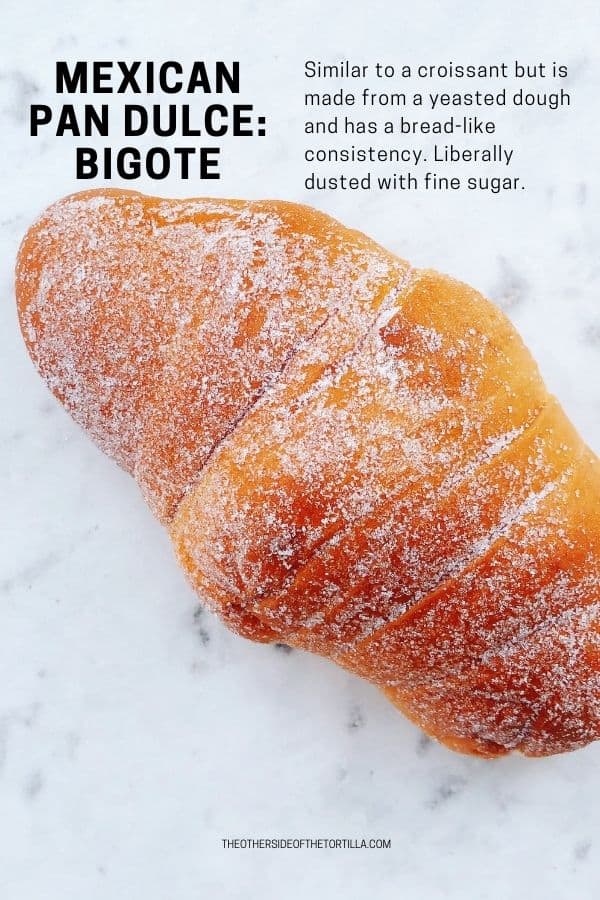
Bigote: A very close cousin of the croissant. Its main difference with its French relative is the liberal use of sugar as a coating. Whereas a French croissant is very flaky from the use of laminated dough, a bigote has more of a bready consistency. They are often dusted with fine sugar but can also be plain.
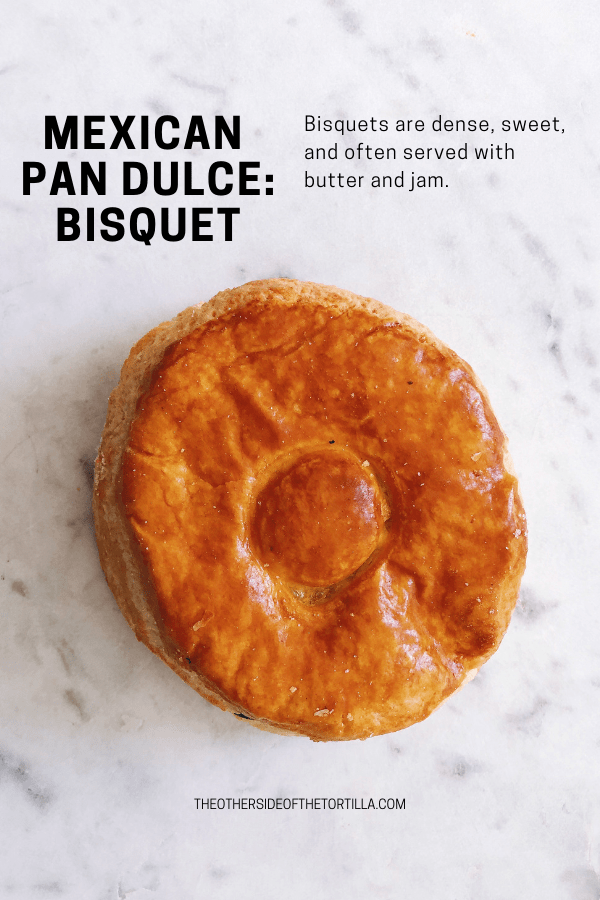
Bisquet: Much denser than a scone and not too different from a buttermilk muffin, this all-day treat can be easily identified by a circular depression on its top, which is painted with egg whites and sugar.
Borrachito: Very common in Mexico City, this bread has a shot glass shape. It has raisins and is covered with a heavy syrup with rum or brandy. In the state of Oaxaca, the dough can be reddish and the syrup will have mezcal.
Broca: Made from puff pastry dough, this crunchy treat takes its name from a drill bit, as it looks just like one.

Buñuelo de viento: A crunchy fritter made from the airiest of doughs and deep fried using a cast-iron mold. It’s typically covered in sugar and cinnamon. A Christmas favorite up and down the entire country, buñuelos have also been a staple of industrial production for decades.
C
Calvo: Think of a concha, a dome-shaped bread, but dipped in chocolate and sprinkled with dried coconut on its edge, made to resemble a bald, old man’s head.
Campechana: Made from a dough not too far off from pastry dough, but sometimes replacing butter with lard, this crunchy bread is a staple of breakfast tables throughout the country. Originally from the state of Campeche, thus its name, campechanas can take many shapes and sizes, but are always a very crunchy, sugary treat.
Cartera: This is basically a French pain au chocolat: same dough and same shape. It may or may not contain the semisweet piece of chocolate inside.
Churros: Originally from Spain, churros are made from a basic choux pastry dough made of flour, salt and water (although some add eggs, sugar and even lard), squeezed through an extruder and deep-fried. In Mexico, it’s the norm to cover them in sugar and they’re never filled.
Colchón de naranja: A pillowy, doughy bread with a hint of orange and egg in its aftertaste, somewhat similar to the King’s Hawaiian bread we consume in the U.S.
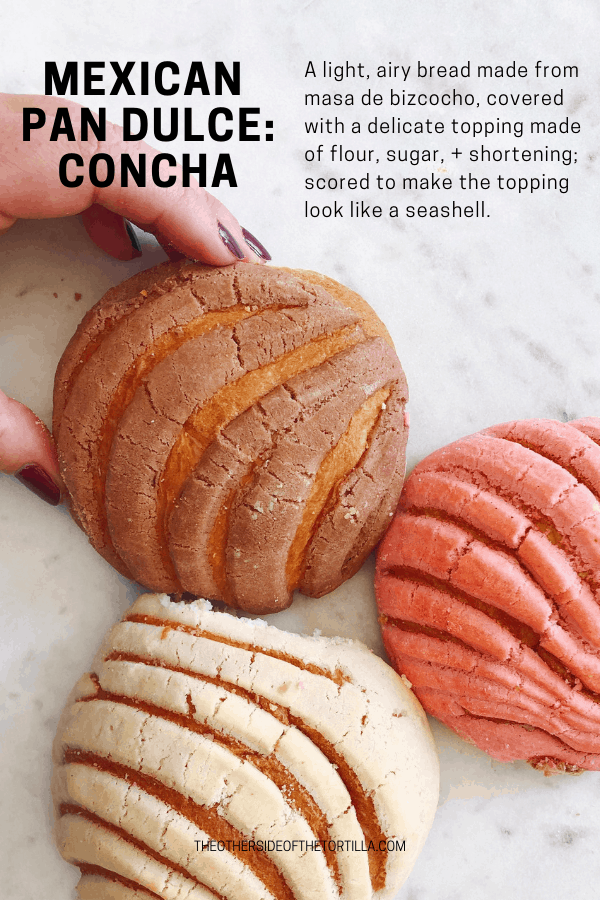
Concha: The most popular and widely-known Mexican pan dulce. It has a dome shape and it’s decorated with a unique four and sugar paste resembling a seashell, which gives it its name. Traditionally the paste topping can be white or brown, the latter made with cocoa powder. Today, more colorful sugar paste toppings have emerged, including pink, yellow and even blue. In the state of Veracruz, conchas also known as bombas.
Cono de crema: A dessert treat made with puff pastry, filled with confectioners cream or custard, and dusted with confectioners sugar.
Corbata (or moño): A riff on the bigote, but with a literal twist in the middle, to resemble a bowtie, and thus its name.
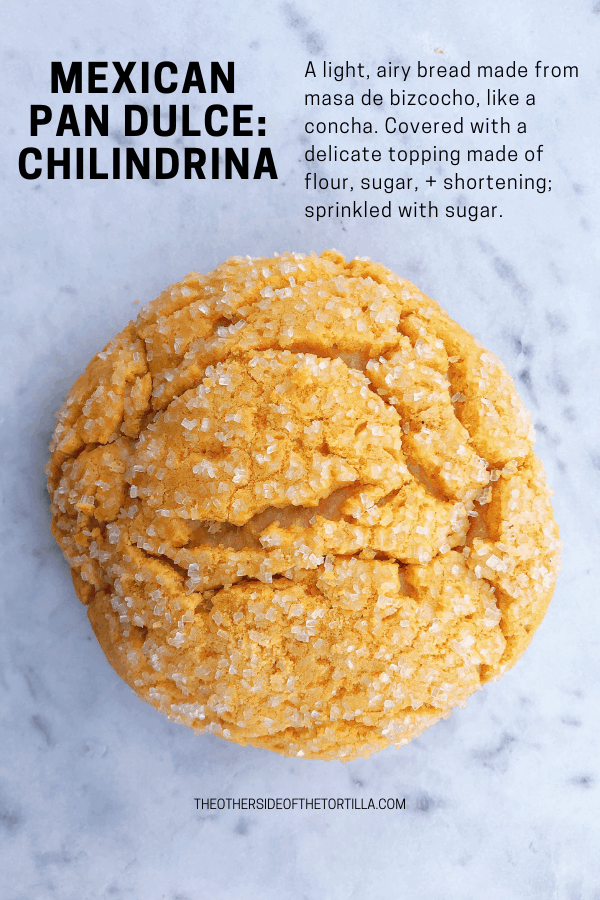
Chilindrina: Similar to a concha in its shape, size and dough, this bread has a lumpy sugar crust. In Oaxaca, it’s used to thicken a type of stew called manchamanteles.
Cubilete: This pastry is a three-bite cheesecake with a more buttery crust, and with a satisfying, soft, creamy center usually made with fresh cheese, not cream cheese. Can be doused in a liquor-infused heavy syrup and sometimes it has pineapple.
Cuernito: Not quite literally a croissant, because the dough usually has much less butter or even no butter, which is substituted with lard, giving it a different, more pillowy consistency. However, the croissant shape remains.
D
Dona: Doughnuts in Mexico are usually not yeasty and are seldom fried, which can be a huge letdown for some people. Mexican donuts, in general, are sprinkled with sugar. In the U.S., it's more common to find yeasted and fried doughnuts with Mexican-flavored glazes or toppings, such as Mexican chocolate glazed doughnuts or hibiscus glazed doughnuts. Dough Doughnuts from Mexican Chef Fany Gerson in New York City and Trejo's Coffee and Donuts from Mexican-American actor Danny Trejo in Los Angeles are great examples of these more American doughnuts with a Mexican-flavored spin.
E
Elote: This cookie takes its name from the shape and the finish given to the outer dough, and to a vegetable colorant used to fill a separate piece of dough that fills the outer shell. The dough contains lard and yeast, making it crumbly but airy. Not to be confused with pan de elote.
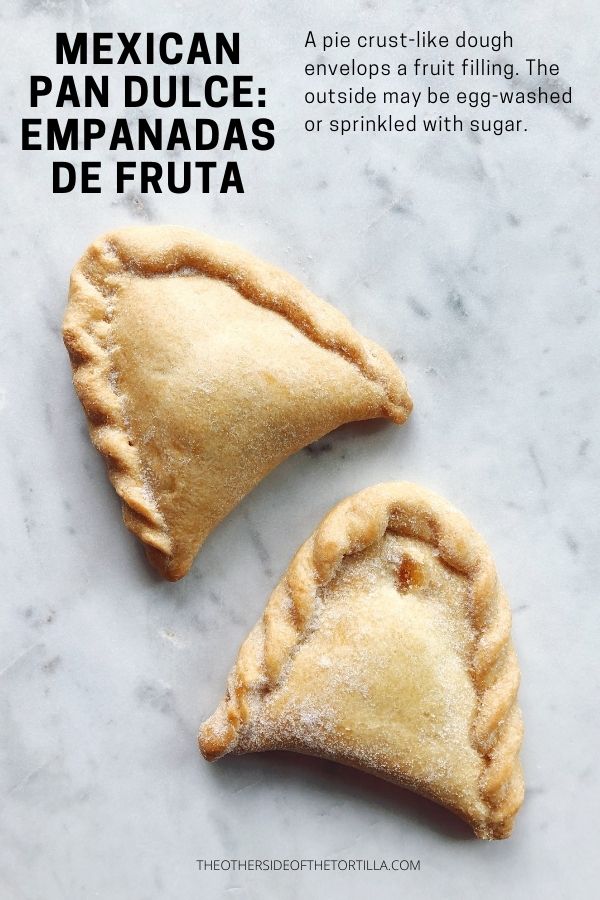
Empanada de fruta: A fruit-filled hand pie, which can be made from a pie crust-like dough, flaky puff pastry or a less buttery dough made with lard. It can also be sprinkled with sugar or painted with an egg-wash to achieve a glossy finish.
F
G
Galleta con grageas: A sugar cookie covered in colorful nonpareils.
Garibaldi: Popularized by the bakery chain El Globo, garibaldi are now a staple of any breakfast in Mexico. It’s a individual-sized pound cake brushed with apricot jam and rolled in white nonpareils. There is also a chocolate-flavored version with raspberry jam, very popular for after lunch dessert.
Gordita de nata: Using flour, sugar, yeast, milk, eggs and, most importantly, nata, a thick, pancake-like disc is formed, given time to rise, and cooked on a griddle. There are many forms of this treat throughout the country varying mostly in size and amount of nata used. Nata is the cream that thickens and congeals when boiling raw milk, also known in English as clotted cream.
Gusano: Again, a figurative name based on the shape of the cookie, but this time, one that may give you the willies. And also, much like its brother, the elote, the gusano is made with a yeasty dough with lard and eggs, but with added cinnamon. It’s finished with a cinnamon-sugar coating.
H
Hojarasca: Cookies with a fragile dough typical of the state of Coahuila, usually placed on guests’ tables at weddings as a snack. Tradition says that the bride’s family or friends are in charge of making and placing them several days in advance. In the state of Michoacán and in the rest of the central region, they’re made with flour, yolks, butter, lard and piloncillo syrup infused with clove, cinnamon and aniseed.
I
J
K
L
Lima: A traditional bread found in Oaxaca that resembles the shape of the fruit as well as its color, by using vegetable coloring. The dough is very similar to that of a concha and the shell, which encompasses the entire piece, is made of sugar, lemon peel and the aforementioned coloring.
M
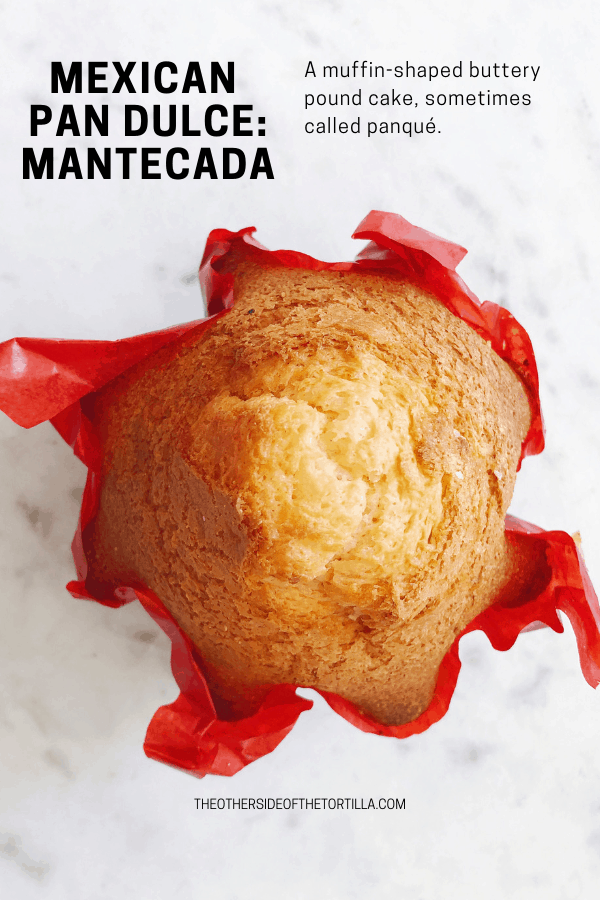
Mantecada: A synonym of panqué, a buttery pound cake. Sometimes confused with cupcakes due to their shape and paper wrapper.
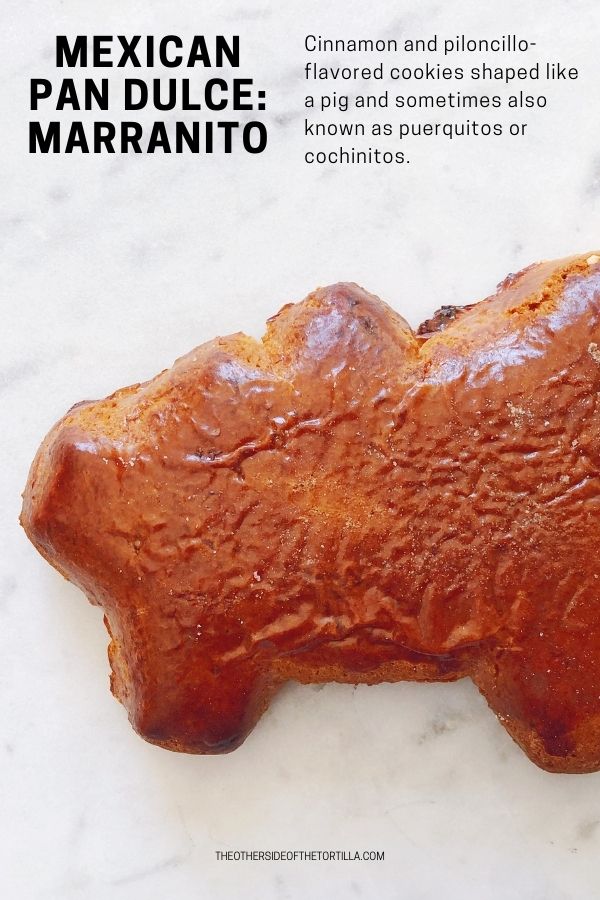
Marranito de piloncillo (or puerquito or cochinitos): A cookie in the shape of a pig—thus the name—made with piloncillo. Very typical of Western Veracruz and Eastern Puebla. It can be found throughout the country and the recipe may vary slightly, but its main ingredients are flour, eggs, piloncillo, cinnamon, baking powder and an egg wash for its shiny finish. Try this recipe for marranitos from Chicano Eats.
N
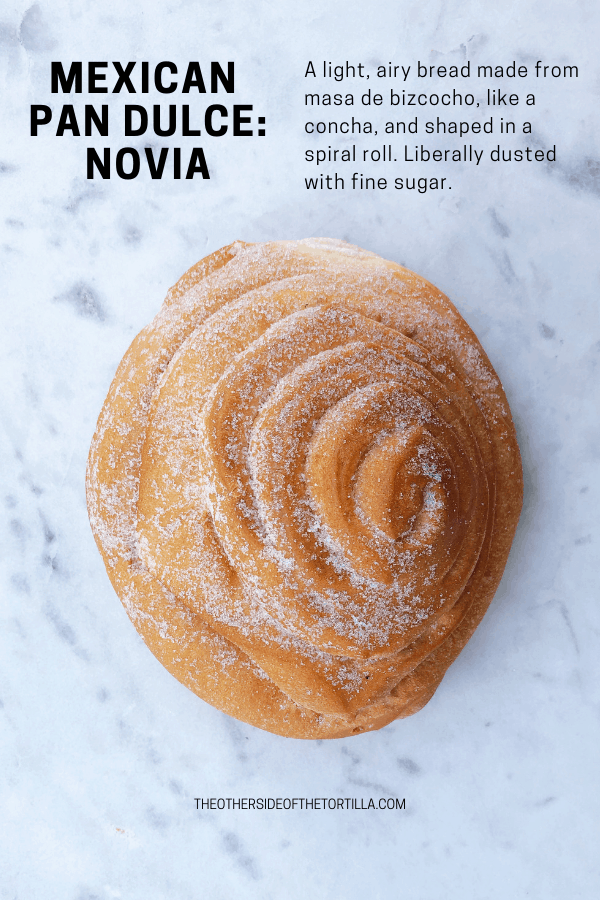
Novia: Very similar to bigotes or corbatas but shaped in a coil similar to a cinnamon roll. Also made with a yeasty dough and doused in liberal amounts of sugar.
Nube: A concha with a fancier, more delicate shell and a sprinkling of sugar that looks like little clouds.
O
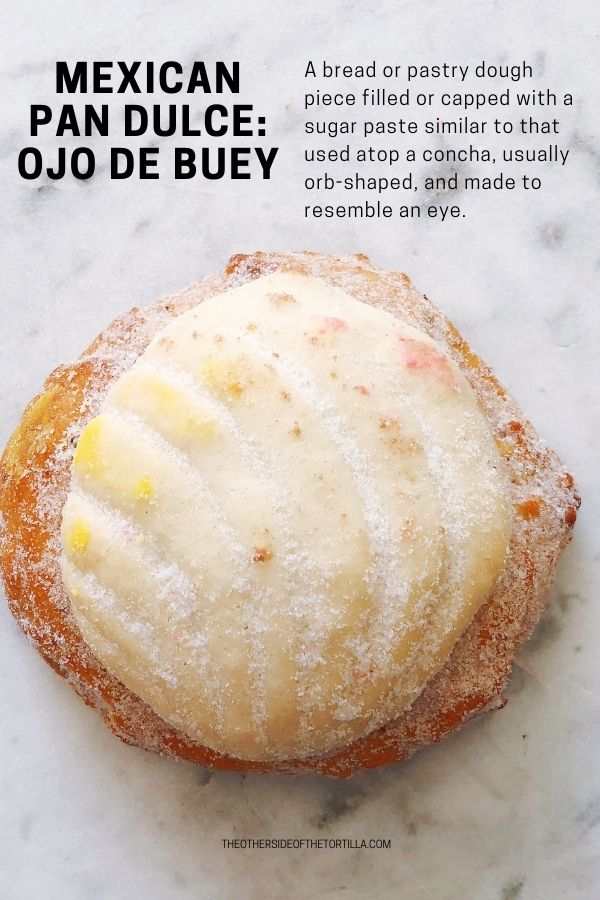
Ojo de buey: A bread or pastry dough piece filled or capped with a sugar paste similar to that used atop a concha, usually orb-shaped, and made to resemble an eye. The inner circle is made of different In some regions, the pan dulce listed above here as a "beso" is also called ojo de buey. Literally means "ox's eye."
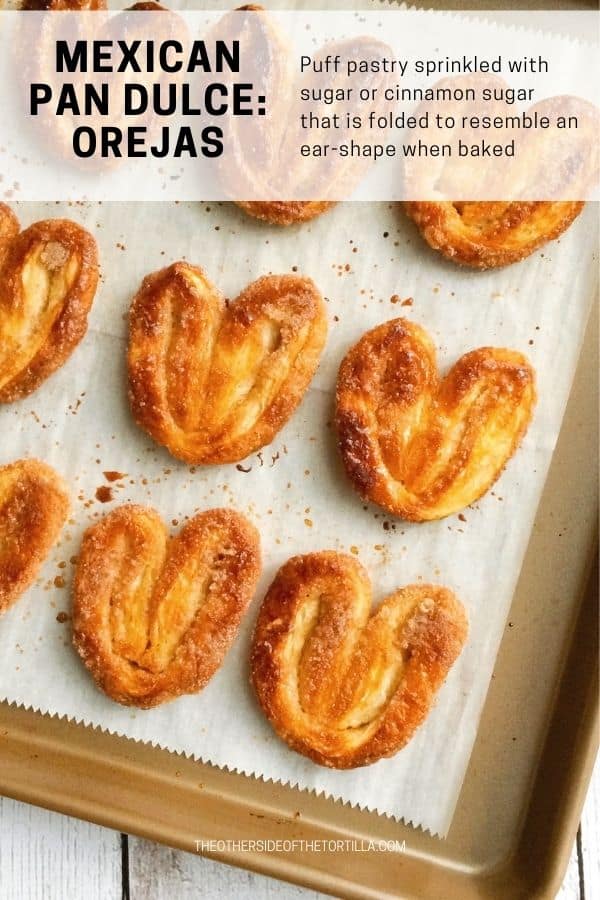
Orejas: Puff pastry cookies of French origin, these are also known as palmeras in Spain. They are sprinkled with sugar and cinnamon, or sugar alone, between layers and rolled to resemble the shape of an ear. This is one of the most popular types of Mexican pan dulce along with the concha.
P
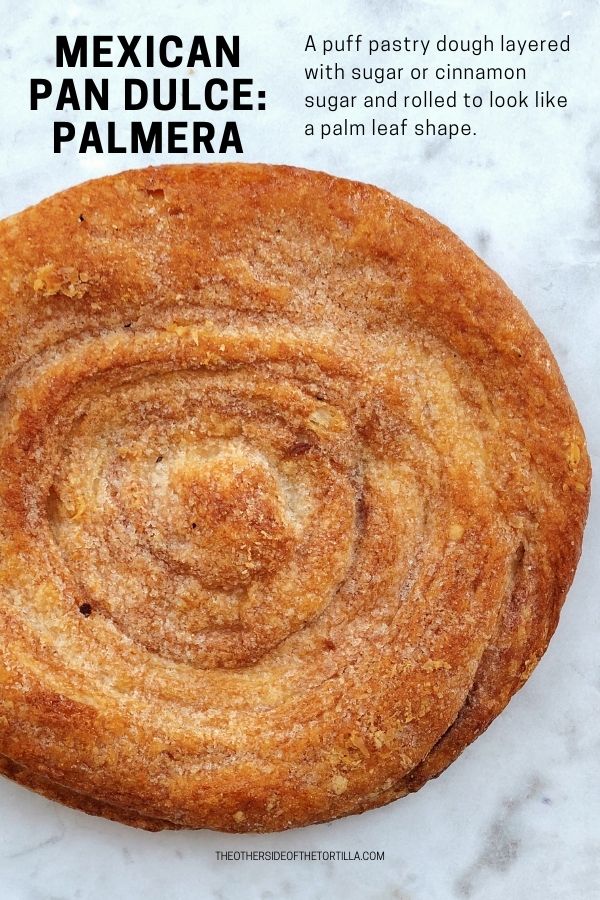
Palmera: See orejas. Larger in size than orejas and formed in a circle shape to resemble a palm leaf.
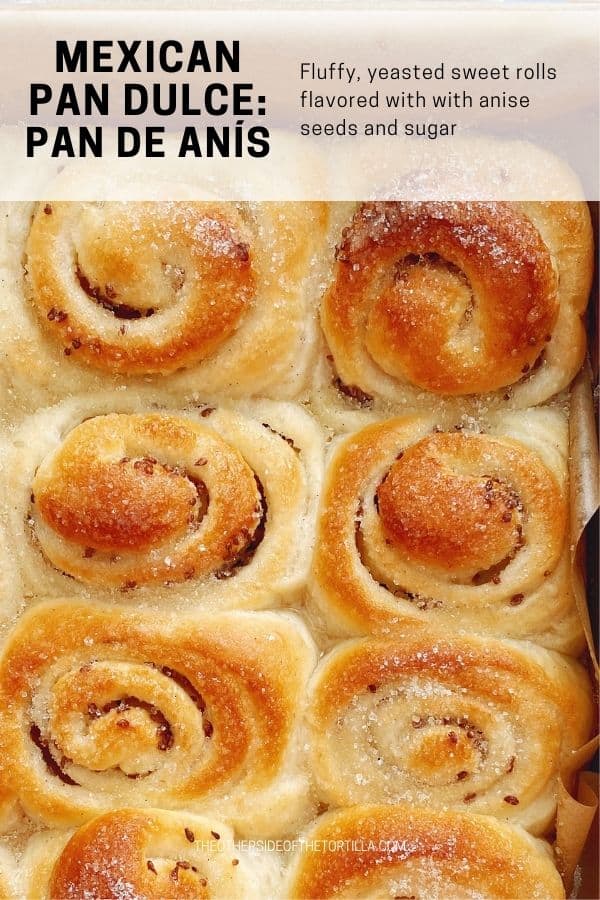
Pan de anis: Fluffy, airy, yet doughy bread with plenty of aniseeds and covered in sugar. These anise rolls are a must if you visit Mexico City’s famed El Cardenal during breakfast hours.
Pan de elote: Cornbread. Sweet corn kernels, eggs, butter, baking powder, sugar and flour. Found all over the country (and the continent).
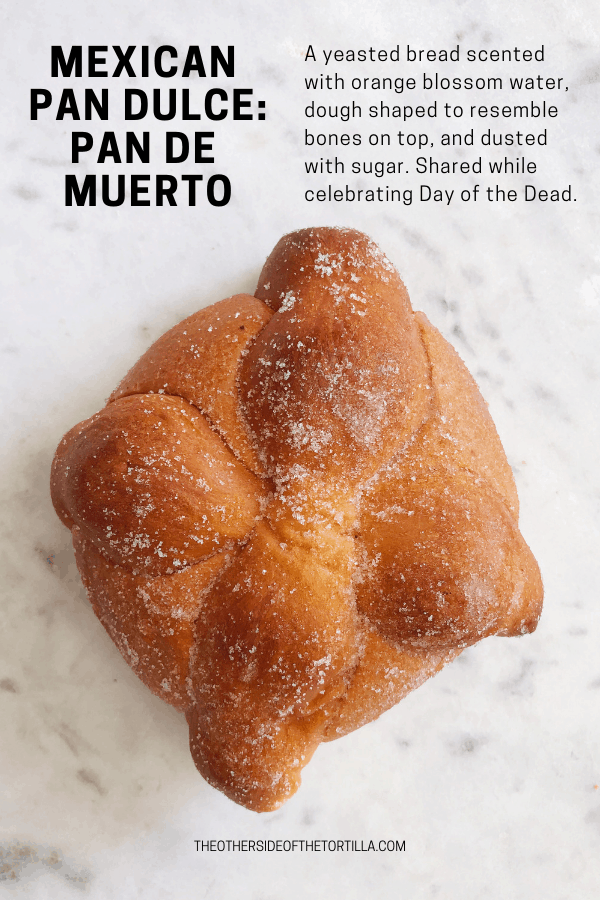
Pan de muerto: Yeasty dough, orange peel and orange blossom water with dough pieces crossed on top made to resemble bones. This is typical of the entire country in the weeks before All Saints Day and Day of the Dead in early November.
Panqué: Pound cake. Made with flour, butter, eggs and sugar.
Peine: Puff pastry filled with jam or jelly and cut in the shape of a comb. Similar-looking to a bear claw pastry.
Picón: Cone shaped bread with three points on one of its ends, covered with an egg, sugar and lard-based custard.
Pollo: Brioche-style bread filled with custard or confectioners cream and sprinkled with powdered sugar.
Polvorón de naranja: Crumbly orange-flavored cookie.
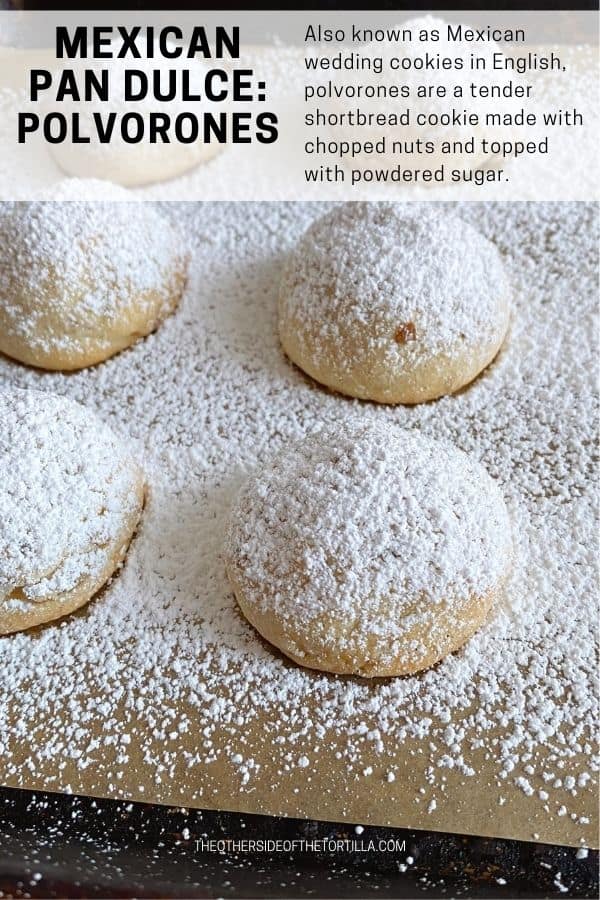
Polvorones, also known as Mexican Wedding cookies: Buttery, crumbly shortbread cookie made with powdered sugar and nuts that can differ based on region. These cookies may have received their name because they're sometimes offered as dessert at country weddings. Although not technically bread, they're still considered a type of pan dulce by many and are available at most Mexican bakeries.
R
Rebanada: A thick slice of white loaf bread, with a thick slather of a sugar paste on one side and baked again.
Rehilete: Similar to a danish but made in the shape of a spinning wheel, or rehilete in Spanish.
Rieles de fruta: Can be made with puff pastry or cookie dough, but either way, they’re stuffed with jam or jelly.
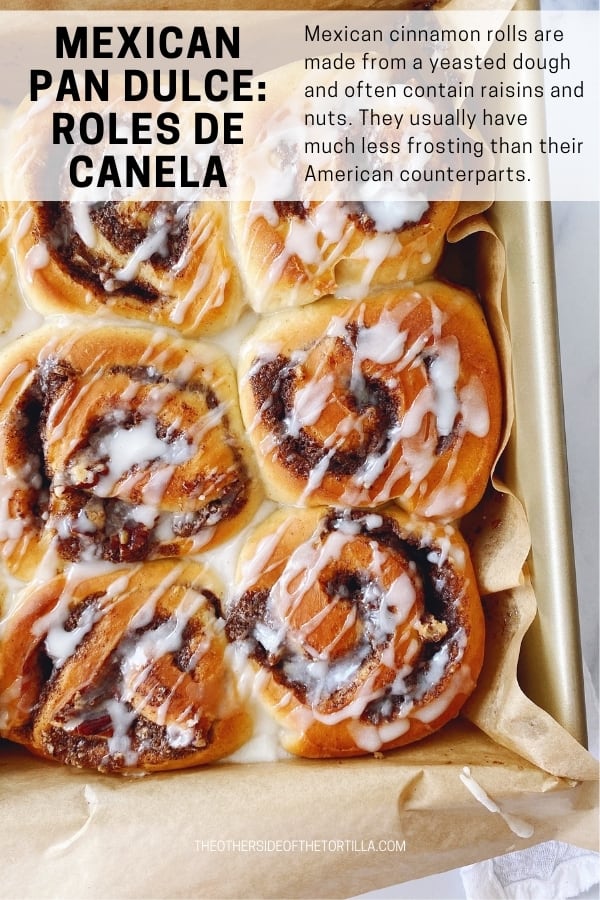
Roles de canela: Cinnamon rolls. Mexicans often like to add raisins and nuts use much, much less frosting.
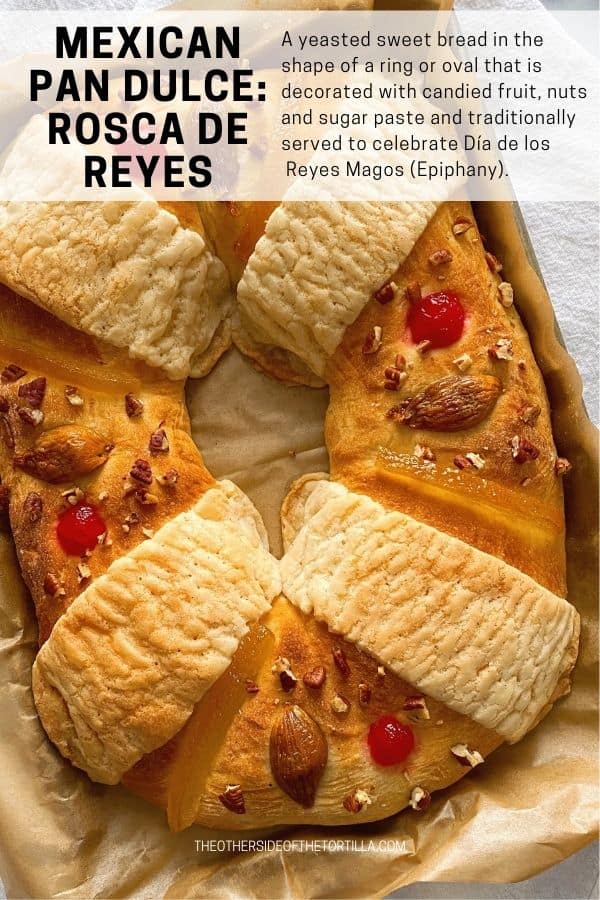
Rosca de Reyes: Yeasted sweet bread made in the shape of a ring or oval, decorated with sugar-crystalized fruit and acitrón (crystalized biznaga cactus). Inside the dough, small, Baby Jesus figurines are hidden within. The rosca is the traditional treat served for the Epiphany (January 6) and it is customary that those who find the figurines inside their slice must invite the other guests to tamales and atole on February 2, Candlemas Day. Modern versions that deviate from traditional toppings also exist, such as a Sugar Crunch Rosca de Reyes.
Rosquilla de canela: Dry, flat, crumbly cookie shaped like a donut and covered in a cinnamon-sugar mix.
S
T
Trenza de hojaldre: A braided puff pastry, sometimes with frosting, similar to a coffee cake.
V
Volcán: A type of concha made with the same ingredients, but with a shell made to resemble a volcano that just spewed rocks.