• Skip to primary navigation
  • Skip to main content
  • Skip to primary sidebar

The Other Side of the Tortilla logo

  • RECIPES
  • INGREDIENTS
  • ABOUT
  • TRAVEL
  • RESOURCES
menu icon
go to homepage
  • RECIPES
  • INGREDIENTS
  • ABOUT
  • TRAVEL
  • RESOURCES
search icon
Homepage link
  • RECIPES
  • INGREDIENTS
  • ABOUT
  • TRAVEL
  • RESOURCES
×

Mexican Christmas Traditions

How to make rompope

29 · Dec 31, 2016 · 1 Comment

Rompope is a Mexican version of eggnog. This popular drink is a staple in many Mexican households and festivities from December all the way until Día de Reyes.

Several years ago, I was able to copy down abuelita's recipe for rompope (which was for a very large crowd, based on the portions) from a typewriter-written version in a family recipe book at my mother-in-law's house. Thinking it was going to be difficult, I didn't make it until a few years later. It was then that I discovered the recipe wasn't quite complete, the directions were sparse and it didn't taste right on the first try. So I got to work in my kitchen, testing and tasting until it seemed right to us.
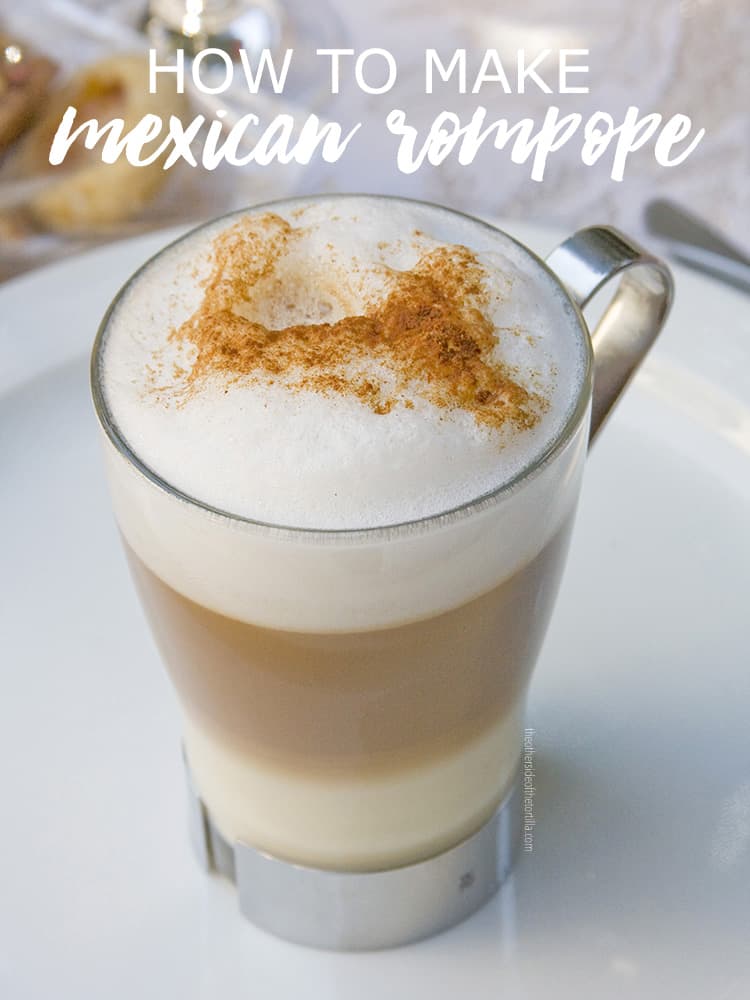
rompope or Mexican eggnog

I've amended abuelita's recipe slightly to my personal taste but so it still maintains its authenticity, and reduced the quantity of the original recipe to make a smaller batch in case we didn't go through it quickly enough.

I recommend if you'll be drinking your rompope solo, half-cup servings are best, and this recipe makes eight half-cup servings. If you'll be serving a small crowd, make double the recipe and just refrigerate any leftover rompope.

RELATED RECIPE: Ponche navideño

One year, José's Tía Annette hosted a fabulously catered posada, which is where I learned to put rompope in my coffee or make lattes with it. I've done it every December since!

rompope

A few notes:

  • If you don't have time to make everything all at once, you can make the cinnamon-infused milk and refrigerate it overnight, and finish the rest of the recipe the next day with no problem.
  • The directions below have descriptions of how the egg yolks should look at ribbon stage, but if you need extra guidance, this video is pretty helpful. It's easiest to do with a stand mixer such as a KitchenAid than it is with a whisk by hand. Don't suffer! Just use the stand mixer.
  • You can find aguardiente in most Latin supermarkets across the U.S. If you don't see it on a shelf in the store, they sometimes keep it locked in a cabinet with the pricier liquors, so just ask. It's anise-flavored liqueur that is produced from sugar cane, and much of what is available in the U.S. comes from Colombia, in my experience.
  • I advise against using imitation Mexican vanilla extract because it really doesn't have the same taste. I only buy Nielsen-Massey Mexican pure vanilla extract, which is available online from King Arthur Flour, Amazon, and Williams-Sonoma or in-store at Whole Foods.
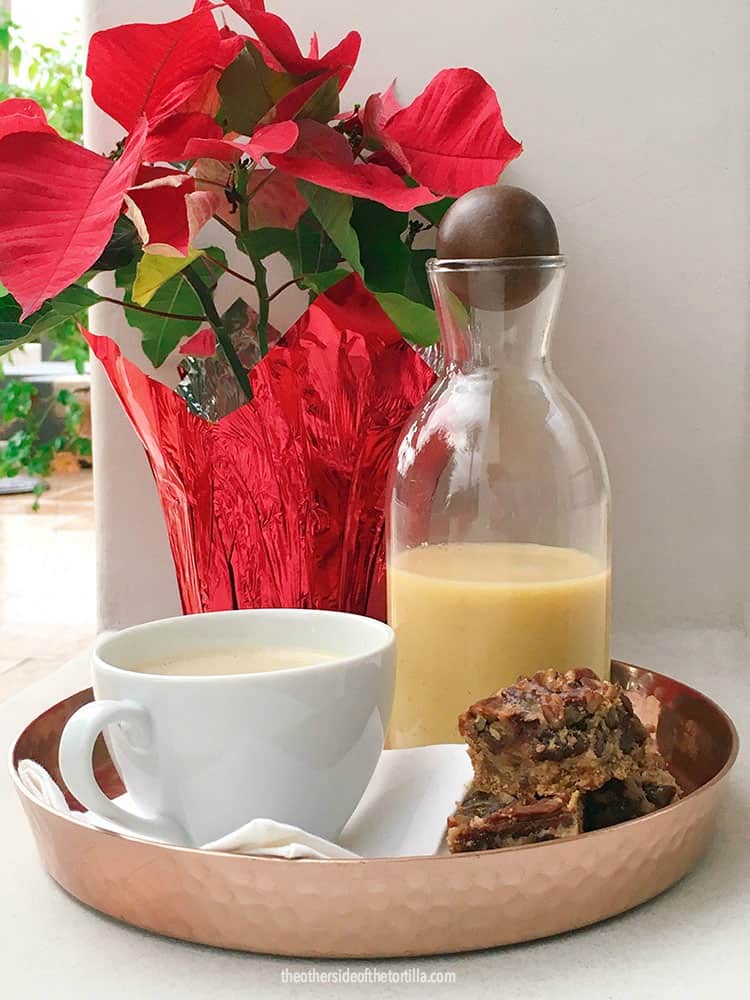
Rompope, also known as Mexican eggnog, served with holiday treats next to poinsettia flowers

RELATED RECIPE: Spicy Mexican hot chocolate

Print

clock clock iconcutlery cutlery iconflag flag iconfolder folder iconinstagram instagram iconpinterest pinterest iconfacebook facebook iconprint print iconsquares squares iconheart heart iconheart solid heart solid icon
rompope

Rompope (Mexican eggnog)

5 Stars 4 Stars 3 Stars 2 Stars 1 Star No reviews
  • Author: Maura Wall Hernandez
  • Prep Time: 15 minutes
  • Cook Time: 15 minutes
  • Total Time: 30 minutes
  • Yield: 4 cups 1x
  • Category: Beverages
  • Cuisine: Mexican
Print Recipe
Pin Recipe

Description

Mexican eggnog, called rompope, is a popular drink during the holidays.


Ingredients

Scale
  • 1-¼ cup whole milk
  • 2-3 Mexican cinnamon sticks (Ceylon cinnamon)
  • 3 teaspoons Mexican vanilla extract (Nielsen-Massey is my preferred brand)
  • 7 extra large or jumbo egg yolks
  • ½ pound of granulated cane sugar (I use Zulka brand)
  • 1 cup aguardiente (cane sugar liquor)
  • ½ teaspoon freshly grated nutmeg
  • Optional: ground Ceylon cinnamon to sprinkle on top to garnish

Instructions

  1. In a small saucepan, heat 1-¼ cups whole milk and Mexican cinnamon sticks over medium heat. Stir frequently to prevent milk from sticking to the bottom of the pan or getting a skin. Bring it to a boil and then remove from the heat. Set aside and allow to come to room temperature.
  2. In a stand mixer with a whisk attachment, add egg yolks to the mixer bowl and bring whisk to medium speed. Start adding the sugar gradually, until you reach ribbon stage. The egg yolks should turn light yellow and look creamy and fluffy.
  3. Turn the whisk speed to low and slowly add the room temperature milk and 3 teaspoons Mexican vanilla extract. Slowly add 1 cup aguardiente (sugar cane liquor) until fully incorporated.
  4. While the whisk is still on low speed, add ½ teaspoon freshly grated nutmeg and continue whisking for 1 minute.
  5. Pour contents of the bowl into an airtight glass bottle and store in the refrigerator for up to 10 days.

Notes

The rompope tastes better on the second day, as the alcohol settles with the other ingredients. If it doesn’t taste boozy enough to you at first, wait to add any more alcohol until at least the day after.


Nutrition

  • Serving Size: ½ cup

Did you make this recipe?

Tag @maurahernandez on Instagram or Threads

RELATED RECIPE: Champurrado

Mexican chicken soup with hominy and barley

22 · Nov 4, 2015 · 4 Comments

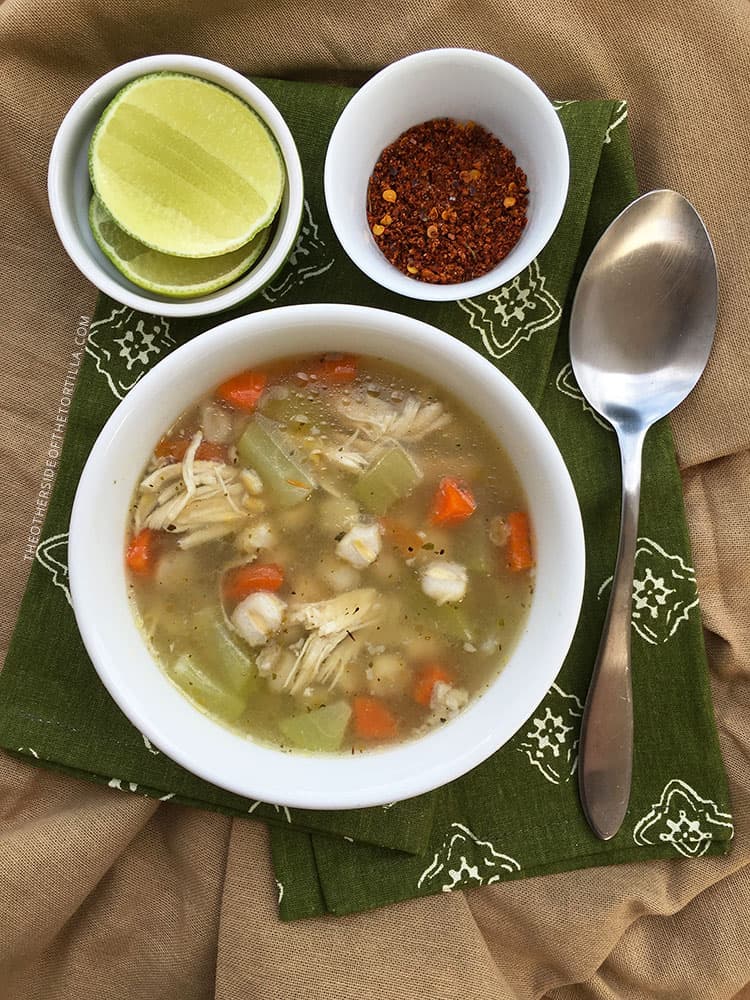
Nothing soothes the soul like chicken soup, no matter what country or culture you identify with. My version of Mexican chicken soup includes hominy and barley for a unique spin on this typical dish.

This post is sponsored by Teasdale Foods. All opinions and the recipe here are my own.

Make this hearty Mexican chicken soup with carrots, onion, Mexican oregano, chayote, hominy, barley and finish the flavor with lime juice and chile powder! Recipe via theothersideofthetortilla.com

RELATED RECIPE: Slow-cooker pozole rojo

My suegro loves the sopa de pollo from this place in Mexico City called el Ricón de la Lechuza, which has been around since 1971. What makes La Lechuza’s chicken soup different than most others is that in addition to the traditional homemade broth, carrots and celery, barley (called "cebada" in Spanish) lends a unique texture and adds to the nutritional profile of the dish.

...

Read More

Slow-cooker pozole rojo

211 · Oct 1, 2015 · 1 Comment

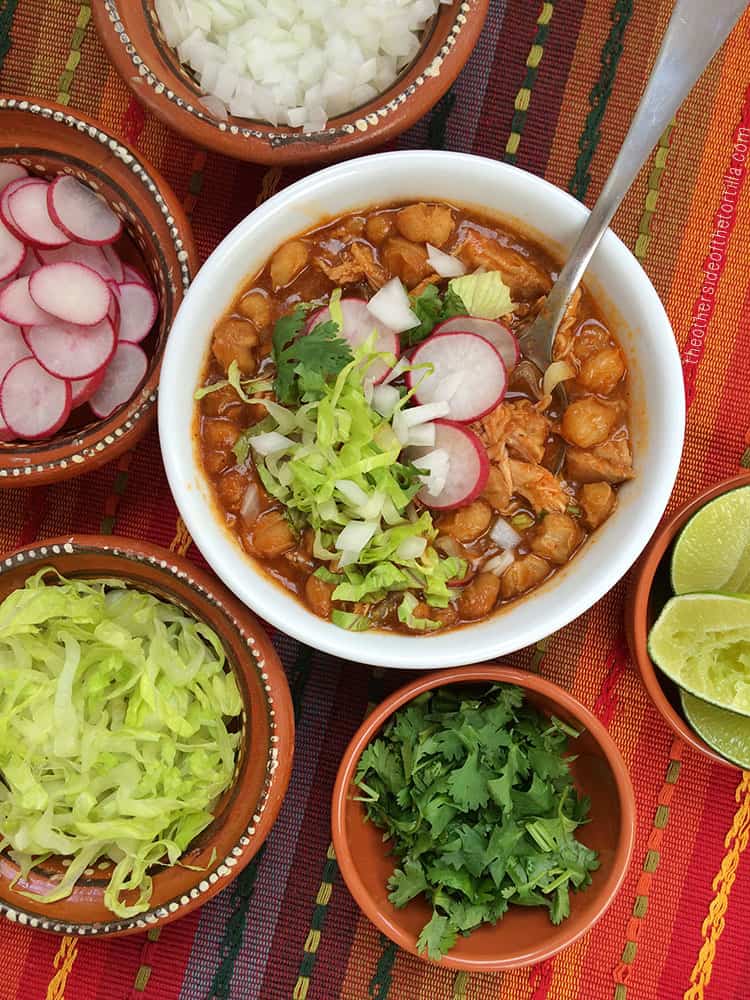
Pozole rojo is a hearty classic Mexican soup or stew, traditionally made with pork broth, pork, hominy, and spices, then topped with garnishes such as lime juice, radishes, onion, lettuce and more. It's a popular traditional dish served throughout the country that is representative of Mexican cuisine.

This post is part of a compensated campaign with Teasdale Foods. All opinions and the recipe here are my own.

I admit that pozole can be an intimidating dish to make at home, mostly because making the perfect pork broth can be tough to match when you're up against the memory of a beloved family member's recipe. But I've found an awesome semi-homemade cheat for pozole that's simple to prepare and easy to love!

I've used Teasdale's new Easy Prep Spicy Red Pozole in this recipe, which is basically just cheating at the broth and hominy preparation—the two factors that often scare people away from making this traditional dish at home if they don't have a trusted family recipe.

Pozole rojo is a hearty classic Mexican soup or stew, traditionally made with pork broth, pork, hominy, and spices, then topped with garnishes such as lime juice, radishes, onion, lettuce and more. It's a popular traditional dish served throughout the country that is representative of Mexican cuisine. Here's how to make pozole rojo in your slow-cooker with a semi-homemade cheat via theothersideofthetortilla.com.

What's great about it also is that you can choose what kind of meat you want to add; I've chosen boneless country pork ribs because they're easy to find, usually have a mix of dark and light meat, and they cook to tender perfection in a slow-cooker. Nothing beats low and slow, especially when there's minimal effort involved.

The majority of the prep time for this recipe is for slicing and dicing your garnishes. I've also doctored the pozole to my personal taste by cooking the pork with bay leaves and Mexican oregano, and adding more chiles to the broth. The slow-cooker also means that most of the cooking is hands-off so you can be doing something else!

RELATED RECIPE: Slow-cooker carnitas

Pozole is a prehispanic dish that has been enjoyed in Mexico for many generations dating at least all the way back to the times of Moctezuma in the latter part of the 1400s, and the preparation still used and served today goes back to the 18th Century, according to culinary historians.

The three main types of pozole you'll find all throughout Mexico are pozole blanco, pozole verde and pozole rojo. In Mexico City, where our family is from, you can find many varieties of the three typical colors of pozole served all over the city, including more than a dozen regional varieties from all over the country. And, they can have pork, chicken, shrimp, or be vegetarian-friendly, too. You can find pozole served everywhere from dedicated pozolerías to markets, fondas and even some high-end restaurants that serve traditional Mexican cuisine.

Traditional garnishes with pozole include:
sliced radishes, diced white onion, shredded iceberg lettuce or cabbage, chopped cilantro, fresh limes, dried Mexican oregano and chile powder, such as ground chile piquin.

In Mexico City, it's very common to serve pozole with tostadas with crema mexicana spread on top, which is to be eaten alternating with a spoonful of pozole, then a bite of tostada.

Whether you love red, green or white #pozole, this traditional #Mexican dish is always fun to eat! Pozole is a hearty soup or stew, traditionally made with pork broth, pork, #hominy, and spices, then topped with garnishes such as lime juice, radishes, onion, lettuce and more. But there are also lots of regional variations of this prehispanic dish, which is popular all over #Mexico and is a staple of the cuisine. Check out my version using a #slowcooker and an awesome cheat that's simple to prepare and easy to love! (Don't forget the tostadas and crema on the side!) 😉 🐷🍲🇲🇽 #Recipe on theothersideofthetortilla.com! #teasdalefoods #ad #mexicanfood #comidamexicana #cdmx #chilango #pozolerojo #instavideo #instafood #instagood #instamex #stopmotion #food #hungry #soup #mydayinLA #fall #crockpot #crockpotcooking #pozoleando #pozolefordays #sopa #sopita

A video posted by Maura Hernandez (@maurahernandez) on Oct 1, 2015 at 9:20pm PDT

This recipe is most similar to Jalisco-style red pozole, and I've added a few extra ancho chiles to the broth for a deeper chile flavor. I like my red pozole fairly spicy, but you can leave them out if you're not accustomed to spicy pozole. But if you do want to incorporate more heat, you can also puree the extra chiles with a little broth once hydrated, then strain them into the soup, or just add a sprinkle of ground chile piquin when serving.

Take care not to overcook the hominy, as it can become mushy. (When in doubt, you can always remove the hominy a little early and put it on the side while your broth is still cooking in the slow-cooker. You'll know the hominy is done when it looked bloomed or fluffy.) Pozole reheats well and can also be frozen. If the broth is thicker than you'd like, you can also thin it out with a bit of chicken broth.

Do you like pozole rojo or pozole blanco better? Let me know why in the comments!

RELATED RECIPE: Frijol con puerco

Pozole rojo is a hearty classic Mexican soup or stew, traditionally made with pork broth, pork, hominy, and spices, then topped with garnishes such as lime juice, radishes, onion, lettuce and more. It's a popular traditional dish served throughout the country that is representative of Mexican cuisine. Here's how to make pozole rojo in your slow-cooker with a semi-homemade cheat via theothersideofthetortilla.com.
Print

Slow-cooker pozole rojo

Prep 30 mins

Cook 4 hours, 30 mins

Total 4 hours, 60 mins

Author Maura Wall Hernandez

Yield 6-8 servings

Pozole rojo is a classic Mexican soup or stew, traditionally made with pork broth, pork, hominy, and spices, then topped with garnishes such as lime juice, radishes, onion, lettuce and more. It's a popular traditional dish served throughout the country that is representative of Mexican cuisine.

Ingredients

  • 2 pounds boneless country pork ribs (preferably with some dark meat and either a little fat marble or visible fat)
  • 1 teaspoon kosher salt
  • 1 large or two medium bay leaves
  • ¼ teaspoon Mexican oregano
  • 1 can (108 ounces) of Teasdale Easy Prep Spicy Red Pozole
  • 2 ancho chiles, stem and seeds removed
  • Traditional garnishes: Sliced radishes, shredded iceberg lettuce, diced white onion, chopped cilantro, lime juice, ground chile piquin or ground chile ancho

Instructions

  1. Place the bay leaf or leaves on the bottom of the slow cooker.
  2. Arrange the boneless country pork ribs on their sides, covering up the bay leaf, and cover the bottom of the slow cooker.
  3. Sprinkle kosher salt and Mexican oregano over the meat. Cover the slow cooker and turn on low heat. Cook for 2 hours, turn meat, and cook for 1 more hour.
  4. After the third hour, open the can of Teasdale Easy Prep and pour the liquid in first. Spoon the hominy over the top and even out so everything is covered by broth.
  5. Turn slow cooker to high heat and cook for 1.5 to 2 hours, until the broth comes to a boil. Remove lid, turn off heat (or turn slow cooker to keep warm setting) and ladle into bowls.
  6. Garnish with a squeeze of lime juice, sliced radishes, shredded iceberg lettuce or cabbage, diced white onion, chopped cilantro, and a sprinkle of Mexican oregano and ground chile piquin or ancho (optional).

Notes

Serve with tostadas and crema mexicana.

Courses Lunch/Dinner

Cuisine Mexican


RELATED RECIPE: Slow-cooker cochinita pibil


Nieve de piña con chamoy

27 · Sep 21, 2015 · 2 Comments

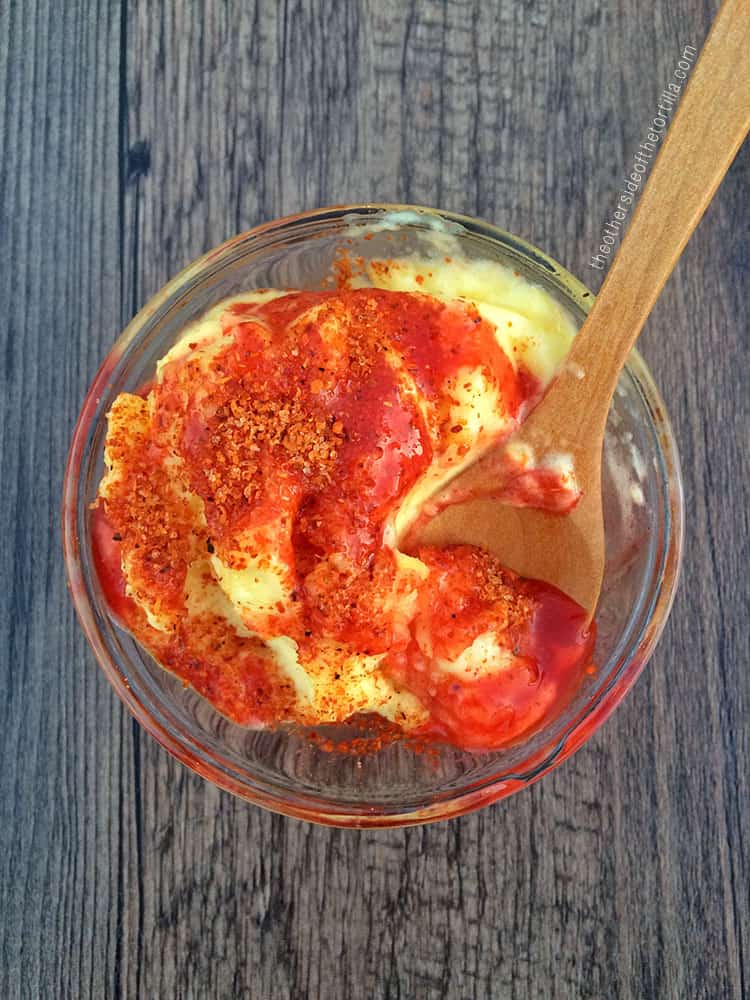
Whether you call it a nieve de piña, a raspado de piña or a chamoyada de piña, it doesn't matter much. They're all equally refreshing on a hot day and I've included directions for them all, made two ways!

How to make a nieve de piña con chamoy with a Yonanas machine or a blender. Recipe via theothersideofthetortilla.com

Nieves and raspados are more or less the same: flavored shaved ice. And chamoyadas are in the same family, but made a little differently; usually they're a slushy consistency and you drink them with a straw. I've included the directions for both below.

...

Read More

Mangonada popsicles

337 · Jul 27, 2015 · 5 Comments

If you love a traditional Mexican mangonada, then you'll love this spin on the classic recipe: mangonada popsicles!

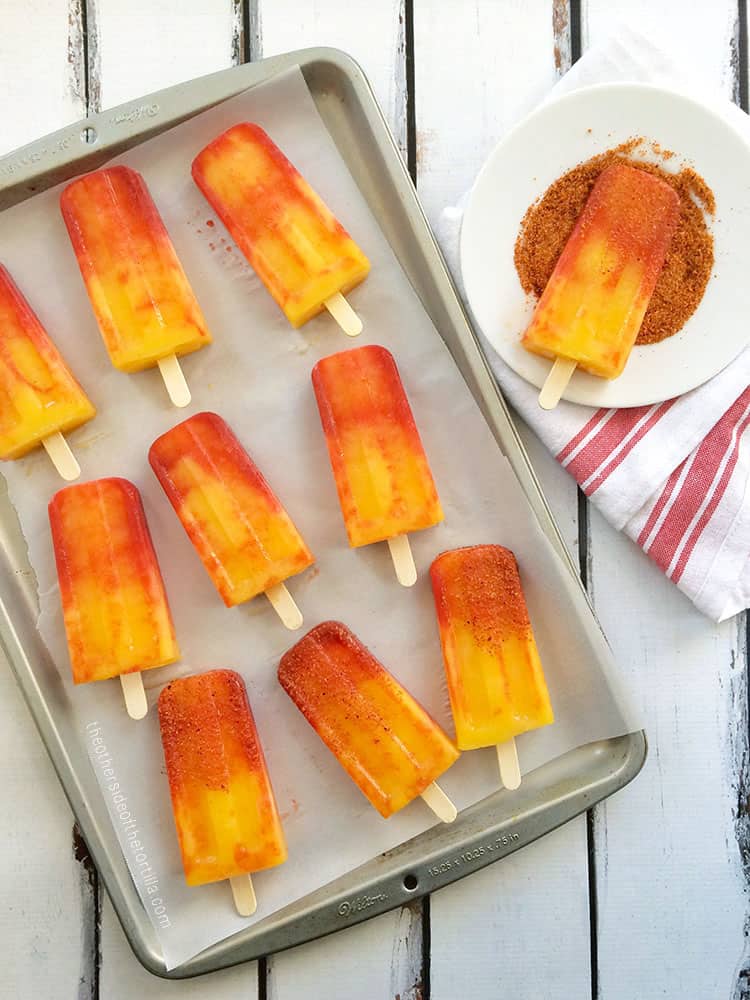
mangonada popsicles displayed on a baking sheet and a plate with tajín chili lime salt for dipping

The mangonada is a quintessential Mexican treat made with mango, orange juice, chamoy and Tajín and it's a popular snack or dessert with street vendors and neverías (ice cream shops) in Mexico. The sweetness of the mango and orange juice is contrasted by the sourness of the chamoy, and together they make a perfect marriage of what's known as an "agridulce" (sweet and sour) flavor. Agridulce candies and treats, such as tamarindo con chile, are common and beloved all over the country.

RELATED RECIPE: Mango cantaloupe popsicles with chile powder

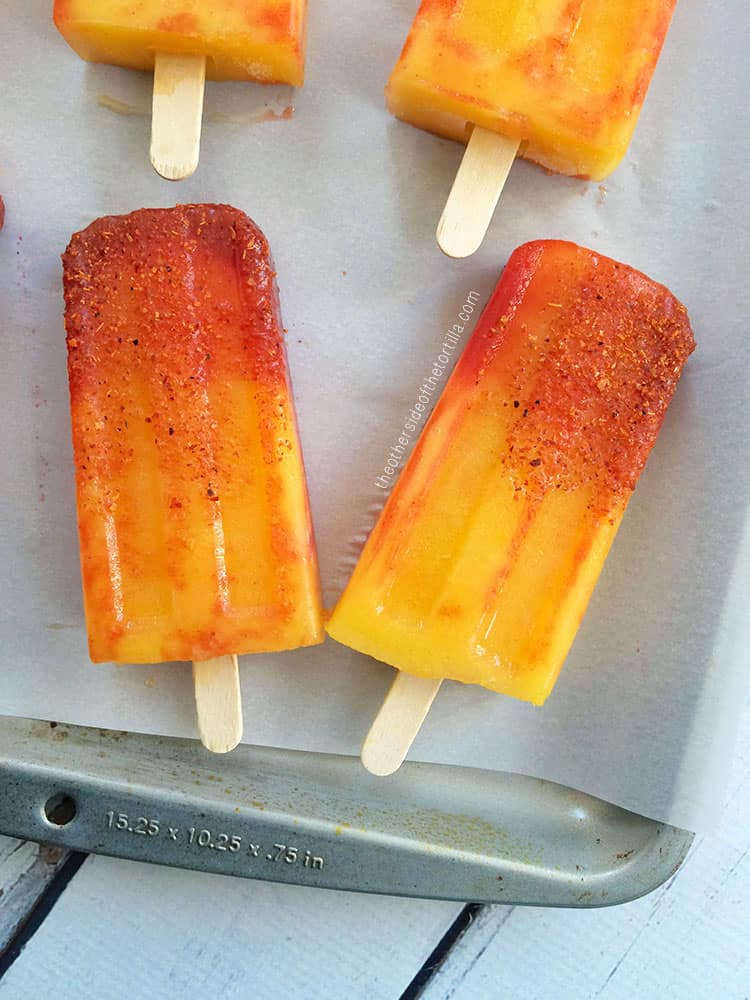
I've used store-bought liquid chamoy in this recipe because it has a very fluid, runny consistency that perfectly drips down into the mold to give the popsicles the marbled look.

Liquid chamoy is available in most Mexican and Latin American markets in the U.S., usually found near the bottled salsas such as Valentina, Cholula and Tapatío. You can pour the chamoy around the rim of each mold to get it to drip down as directed in the recipe below, or you can put the chamoy in a small plastic chef's squeeze bottle if you want more control.

Close-up of mangonada popsicles that are red, orange and yellow

The real variable in this recipe, though, is how much Tajín you sprinkle on top! The more Tajín you use, the more sour and salty flavor you'll get. If you haven't had a mangonada before, I'd recommend that you start with just a pinch of Tajín sprinkled on top in case the salty-sour experience isn't really your thing.

RELATED RECIPE: Frozen orange slices with Tajín

I've used a popsicle mold from Amazon which makes 10 three-ounce popsicles and holds the sticks perfectly in place while in the freezer. If this recipe makes a little more than what will fit in your popsicle mold, you can drip some chamoy down the inside of a drinking glass and fill with the remaining orange, mango and lime mixture to have a little mangonada. Just add a straw and a sprinkle of Tajín on top and enjoy!

Print
clock clock iconcutlery cutlery iconflag flag iconfolder folder iconinstagram instagram iconpinterest pinterest iconfacebook facebook iconprint print iconsquares squares iconheart heart iconheart solid heart solid icon
Mangonada popsicles displayed on a cookie sheet

Mangonada popsicles

5 Stars 4 Stars 3 Stars 2 Stars 1 Star 5 from 3 reviews
  • Author: Maura Wall Hernandez
  • Prep Time: 15
  • Cook Time: 8 hours
  • Total Time: 8 hours, 15 minutes
  • Yield: 10 3-ounce popsicles 1x
  • Category: Dessert
  • Cuisine: Mexican
Print Recipe
Pin Recipe

Description

Make this fun spin on a traditional Mexican mangonada by adapting the recipe for your favorite popsicle mold!


Ingredients

Scale
  • 2 cups fresh-squeezed orange juice (about 4 large Valencia oranges)
  • juice of ½ a medium lime
  • 2 ½ cups frozen mango chunks
  • ⅓ cup store-bought liquid chamoy
  • Tajín, to taste

Instructions

  1. Juice the oranges and lime.
  2. In a blender, add orange juice, lime juice and frozen mango chunks. Blend on high until completely smooth. Set aside.
  3. Measure out ⅓ cup chamoy. Pour a little chamoy (a few teaspoons) around the edges of each popsicle mold, allowing chamoy to drip down the sides and pool a little bit in the bottom of the mold.
  4. Pour the mango mixture down the center of each mold, being careful not to let it disturb the chamoy dripping down the inside of the mold.
  5. Put the top on the mold, add popsicle sticks and freeze for at least 8 hours.
  6. To remove from mold, gently run lukewarm water over the bottom of the mold (opposite the sticks) to loosen the popsicles.
  7. Sprinkle with Tajín to taste, or pour Tajín on a small plate and dip the tips of each popsicle in a little Tajín and serve.

Did you make this recipe?

Tag @maurahernandez on Instagram or Threads

RELATED RECIPE: Street food-style mango cups

  • « Go to Previous Page
  • Page 1
  • Interim pages omitted …
  • Page 9
  • Page 10
  • Page 11
  • Page 12
  • Page 13
  • Interim pages omitted …
  • Page 83
  • Go to Next Page »

Primary Sidebar

¡Bienvenidos!


Hi, I'm Maura Hernández, an award-winning food and travel writer, recipe developer, and former journalist sharing my passion for all things Mexico. I've traveled Mexico extensively over the last 18 years and Mexico City is my home away from home. Here, you'll find a mix of traditional and modern Mexican cooking, along with my advice on where to eat, stay and play on your visit to Mexico!

More about me

Paletas

  • Berries and cream popsicles are a mixed-berry spin on the traditional Mexican fresas con crema dessert. Recipe via theothersideofthetortilla.com
    Moras con Crema Popsicles
  • How to make strawberry hibiscus popsicles via theothersideofthetortilla.com
    Strawberry hibiscus popsicles
  • Mangonada popsicles displayed on a cookie sheet
    Mangonada popsicles
  • How to make banana, chia and coconut milk popsicles. This recipe is dairy-free and vegan-friendly! Via theothersideofthetortilla.com
    Banana chia popsicles
  • Mango cantaloupe and chile powder paletas from The Other Side of The Tortilla
    Mango cantaloupe paletas with chile powder
  • #Vegan fudge #popsicles made with avocado, raw cacao powder, coconut sugar and coconut milk. Get more #recipes from theothersideofthetortilla.com #paletas #receta #recipe
    Vegan avocado fudge pops

Footer

↑ back to top

About

  • Privacy Policy
  • Disclaimer

Contact

  • Contact Me
  • Media Kit
  • FAQ

As an Amazon Associate, I earn from qualifying purchases.

Copyright © The Other Side of The Tortilla, 2009-2024