Check out these beautiful pink and white nochebuenas I spotted in the grocery store last week. They're a variation of the traditional all-red poinsettias but just as lovely.
¡Feliz Navidad!
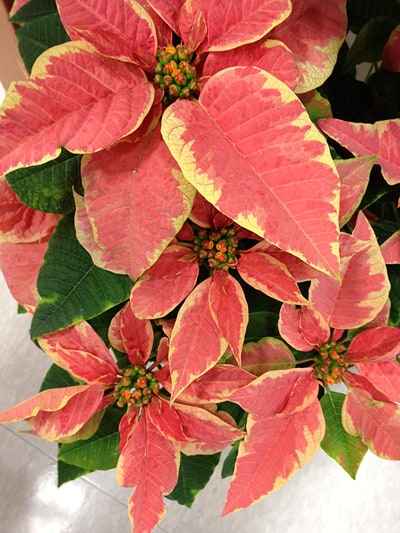

Check out these beautiful pink and white nochebuenas I spotted in the grocery store last week. They're a variation of the traditional all-red poinsettias but just as lovely.
¡Feliz Navidad!
 During the winter, I love to eat warm, hearty treats. There's something about the winter weather that makes you want to eat things that'll stick to your ribs, right?
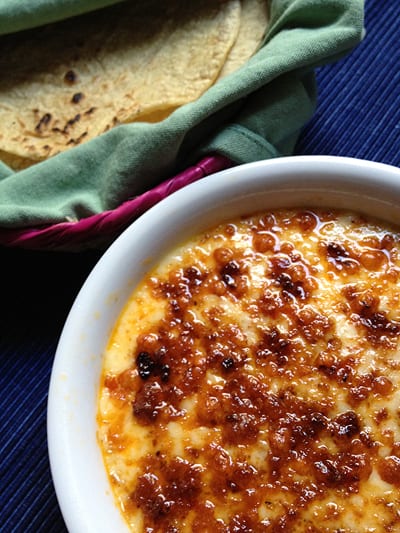
This past weekend, I made a very simple queso fundido that really hit the spot. Given that I just shared a recipe for homemade chorizo earlier this week, I thought it would be nice to give you another way to use that during the holidays for a quick and easy party treat.
Whether you're hosting at home or need to bring a dish to a posada or any other type of party, this is a super simple recipe that's sure to wow guests. To take it to go, just prepare in the crock or a casserole dish and wait until you arrive at the party to pop it under the broiler for a few minutes. Don't forget to bring some tortillas!
RELATED RECIPE: Vegetarian queso fundido with mushrooms and poblano chiles
We like to make tacos out of this recipe, but you can absolutely also serve it dip-style with chips if you like.
Queso fundido is a classic Mexican appetizer that can be eaten with warm tortillas or tortilla chips. You choose the mix-ins!
Ingredients
Instructions
Notes
Note: the cooking spray is completely optional; I like to use it because it helps a lot with cleanup and getting all the cheese out of the dish before it makes it to my sink.

Finally! The Choco Zucaritas cereal I love so much has, at last, appeared in my local market. I'm sure my friend Tracy will be thankful I can buy them in Chicago so she won't have to send me another box from the Washington, D.C. area! If you're in the Chicago area, I was shopping at Strack & Van Til on Elston when I spotted them this past weekend.
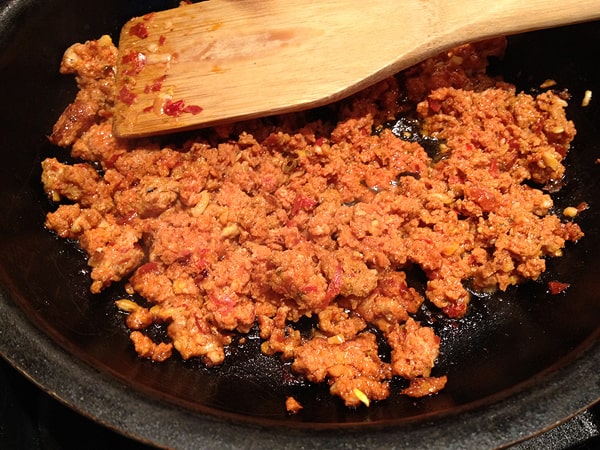
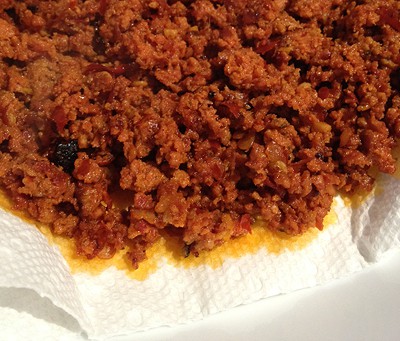
I always used to buy chorizo prepackaged or from the butcher because I thought it would be too hard to make at home. After months of wondering, I finally decided to delve in and give it a shot. The results were fantastic! Now that I know how incredibly easy it is to do on my own, I'll think twice next time I reach for a package of chorizo in the grocery store.
RELATED RECIPE: Queso fundido with chorizo
A lot of people think of Spanish chorizo when they read chorizo in an ingredient list, and though Mexican chorizo is different, it's equally delicious. Spanish chorizo is a hard, cured meat (think similar to a cured hard salami), and Mexican chorizo is a soft sausage-like meat, almost like a breakfast sausage patty if you broke it up into little bite-size pieces.
I love to use chorizo in a variety of ways: anything from breakfast dishes such as huevo con chorizo, to snacks such as queso fundido, to spicing up vegetables in dishes such as calabacitas rellenas. It's also great as a topper to tostadas or sopes, and can be used to make fun little party appetizers like these chorizo and avocado cups with chipotle crema.
RELATED RECIPE: Huevo con chorizo breakfast tacos
I used a blend of three chiles to make my homemade chorizo slightly spicy and also some chopped onion and garlic to give it the right texture. The vinegar helps with giving the meat the signature crumble of Mexican chorizo.
My chorizo recipe was recommended by the New York Times Diner's Journal in December 2011.
Ingredients
Instructions
Notes
You can refrigerate cooked or uncooked leftovers for a few days or freeze raw meat in an airtight container or plastic zippered bag for a few weeks.
RELATED RECIPE: Trenza de huevo con chorizo
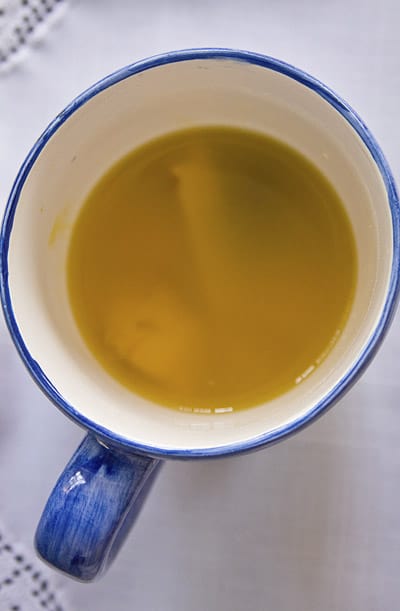 December 16th begins Las Posadas, the nine days of celebration leading up to Christmas Eve, also known as Nochebuena.
It's customary for families to gather together, eat, sing and have a piñata at the party. Sometimes people celebrate posadas by going from home to home, singing the traditional song to ask for lodging the way Mary and Joseph did. But whether you travel around to different homes or stay in one place, there are certain elements of your family's posadas that you inevitably love more than anything else, and will always try to recreate as you grow older, and especially as you have children so you can teach them your family's traditions.
For me, the most beloved posadas tradition is making ponche Navideño. Every year, even if I don't have access to fresh ingredients, I do my best to find canned, jarred or frozen ingredients for the things I can't easily find in the U.S. Even though I know I'll have it when I get to Mexico, I feel it's really important to perfect the recipe at home with available ingredients.
I want our future children to know that it's a Mexican Christmas staple and always have memories of the smell and taste. I want them to think of love and family and La Navidad when they think of ponche, just the way that I do. I always look forward to spending time with family in Mexico City during the holidays, and I know there will always be an abundance of ponche Navideño. It's present at almost every family gathering but the most special thing about it for me is that it's become a family tradition to make it together with my suegros, whom I adore con todo corazón.
We stand around the kitchen, my suegro chopping the caña (sugar cane), while my suegra takes care with the liquid measurements. I slice the guayabas and juice the oranges, add the canela and core the tejocotes. And before a few years ago when I finally put it on paper, our family recipe wasn't officially written down anywhere with any information other than what should go in it. Learning how to make this family recipe with my suegros meant a lot to me in being able to eventually pass down this tradition.
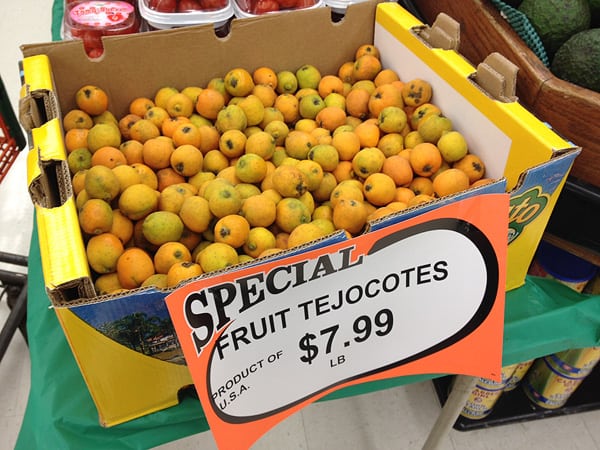
So, last week when I was grocery shopping in a store I don't usually frequent and I found a box of fresh tejocotes, I had tears in my eyes as I stood in disbelief in the middle of the produce aisle. This was the very first time I'd ever seen fresh tejocotes in a market near Chicago (also grown in the U.S., according to the box). Tejocotes have long been prohibited from being imported fresh from Mexico as a precaution due to the possibility of harboring exotic pests. Only in recent years have there been growers in the U.S. (mostly in California) who've begun cultivating crops of tejocotes, also known in English as Mexican hawthorn. I was surprised and overjoyed to see them in a local store. Though I was tempted to buy the whole box, I painstakingly picked through it to find the most perfect ones to add up to half a pound, just enough for one large pot of ponche.
This year, our family is still headed off on a vacation together as usual, but not within Mexico. As excited as I am to go somewhere new and experience new things, I can't help but feel a little sad that I won't be attending Tía Annette's big posada Navideña in Mexico City.
I'll miss sipping ponche and café con rompope and eating galletas with my other tías while catching up on all the gossip I've missed since my last visit. I'll miss our tío dangling the piñata over the garden for the kids from the second story window, laughing and smiling as he tugs it just out of their reach. I'll miss seeing how much some of the younger cousins have grown up this past year. I'll miss Tía Nene and her famous pastel de dátil (something I still need to learn how to make). I'll miss the nochebuenas, which are much more beautiful and exotic-looking in their native Mexico. I'll miss posing for a huge family holiday photo, comprised of four generations of our beautiful family.
As I write this, my kitchen is perfumed by the scent of ripe guayabas, waiting to be made into ponche this weekend. There are oranges, tejocotes, canela and ciruelas pasas. I still need to find some fresh sugar cane; I have a good idea of where to get it locally, but I've still got some in a jar as a backup. And though there will be no cousins, tíos, piñatas, pidiendo posadas or certain favorite holiday foods this year, the memories will swirl steadfastly in my heart and my kitchen as I stew a big pot of ponche before I jet off to my holiday destination.
›› GET THE RECIPE FOR PONCHE NAVIDEÑO