A few weekends ago when we were in Acapulco, I spotted this elaborate nacimiento at the hotel where we were staying. It's hard to see, but near the lefthand bottom corner, there's even a cactus with little orange tunas on it. ¿Chido, no?
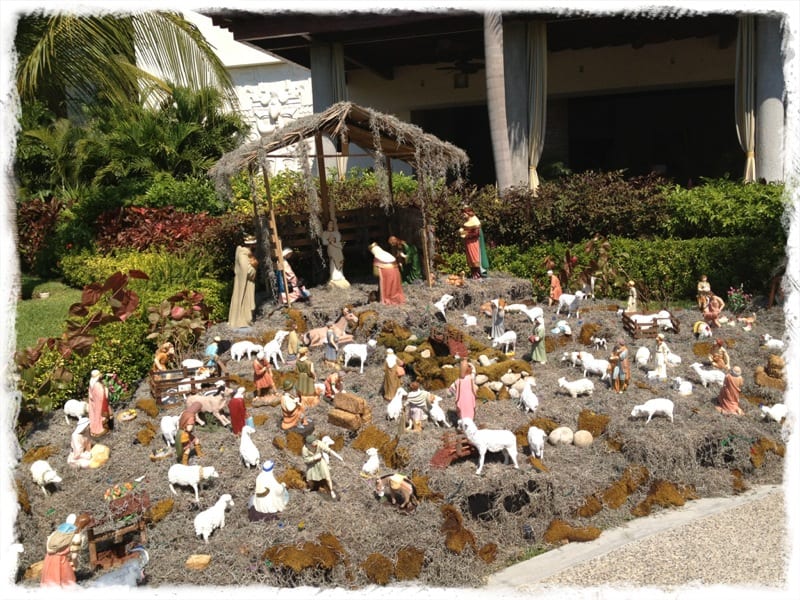

A few weekends ago when we were in Acapulco, I spotted this elaborate nacimiento at the hotel where we were staying. It's hard to see, but near the lefthand bottom corner, there's even a cactus with little orange tunas on it. ¿Chido, no?
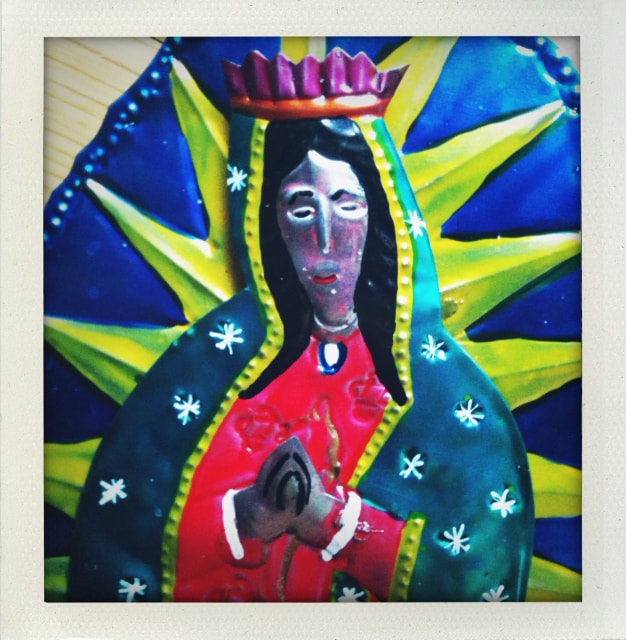
December 12th is a very important day in Mexico for faithful Catholics—El día de la Virgen de Guadalupe. If you're not familiar with the story, here's the very abbreviated version: in 1531, the Virgin Mary appeared to a poor Aztec man named Juan Diego, who had converted to Christianity several years before. He was so poor that he wore no shoes, and his mantle was coarsely woven of cactus cloth as he could not afford cotton. He often traveled hours to make his way from his home to the nearest church, and during one of his journeys, the Virgin Mary appeared to him and asked him to build a temple there in her honor. She appeared to him a total of four times before the miracle occurred when her image appeared on his cloak. The bishop requested that Juan Diego bring him a sign to prove what he had seen; after telling La Virgen that they requested physical proof of what he'd told them, she revealed to him several varieties of fresh, blooming Castilla roses (which were out of season), that he brought as proof and which amazed the bishop. When he unfolded his cloak (called a tilma), the roses scattered and the image of the Virgen de Guadalupe appeared, just as it exists on the tilma hanging in the Nueva Basílica de Santa María de Guadalupe today. The sanctuary that stands at the location where Juan Diego revealed the roses to the bishop is called La Capilla del Cerrito.
In the 1730s, La Virgen (also sometimes referred to as La Morenita) was adopted as the patroness of Mexico City. This is why her image can be found just about everywhere—from churches to market stalls to homes and even on quirky trinkets. She is beloved by all and today, the basilica in Mexico City is one of the most-visited Catholic shrines in the world. She is credited for performing many miracles to those who pray to her to watch over them....
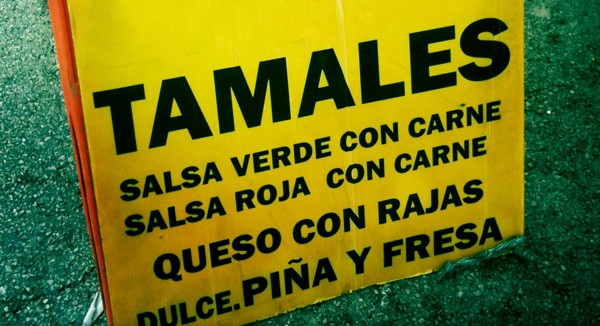
I adore tamales; they remind me of the holidays and various special occasions. When I smell them, I get a warm, fuzzy feeling inside that is hard to explain. No other food gives me the same exact feeling, actually.
There were tamales at my wedding shower in Mexico (called a despedida). There have always been tamales available for birthdays and Christmas and Día de La Candelaria. In fact, on Día de Los Reyes, I've had the luck to get the baby Jesus figurine in my piece of Rosca de Reyes several times in the past. As tradition goes, if you get the figurine, you're responsible for bringing tamales for everyone on Día de La Candelaria. When José's abuela passed away, everyone came back to the house after the prayer service to have tamales, like she would have wanted us to. They're a staple and a symbol in Mexican cuisine.
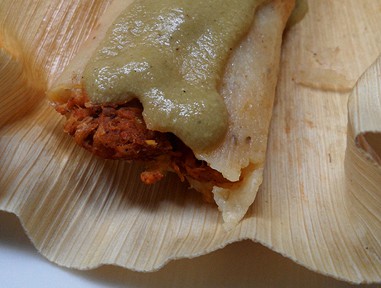 So, it might surprise you to find out that I've never before hosted my own tamalada—a tamal-making party. Yes, it's true. I've never hosted one, but I really want to in the coming year! My favorite savory tamales are usually tamales de pollo con salsa verde and when it comes to the sweet variety, un tamal de chocolate makes my mouth water and my heart skip a beat. I've made tamales on my own at home but never had a party and invited friends and family to help out and enjoy them with me afterward.
One reason a lot of people don't make their own tamales at home is because it's a bit labor intensive. There are several steps to successfully making them, and it's time-consuming. To make it worthwhile, a tamalada is the perfect solution because everyone gathers together at one place and forms an assembly-line style workforce to get everything finished in less time. Then you can steam them in your tamalera. When they're done, it's party time! There's nothing quite like a freshly-steamed tamal, whether it's savory or sweet.
Here are the five basic steps for a successful tamalada, according to the advice I've received and what I've observed, and that I plan to follow when I host mine:
Check out these recipes from Maseca for all kinds of different tamales.
This is a sponsored post through a campaign with Maseca and Latina Bloggers Connect. Though I am being compensated for participating, all opinions, recipes and stories are my own.
I'm a huge fan of the creative Google doodles, especially when they've got cultural significance. Today, the 125th anniversary of Diego Rivera's birthday, the Google doodle teaches you a little about him! Check out the video.
[youtube]http://www.youtube.com/watch?v=Up3YYl5LJX0[/youtube]
Want to read more from The Other Side of The Tortilla about Diego Rivera?