• Skip to primary navigation
  • Skip to main content
  • Skip to primary sidebar

The Other Side of the Tortilla logo

  • RECIPES
  • INGREDIENTS
  • ABOUT
  • TRAVEL
  • RESOURCES
menu icon
go to homepage
  • RECIPES
  • INGREDIENTS
  • ABOUT
  • TRAVEL
  • RESOURCES
search icon
Homepage link
  • RECIPES
  • INGREDIENTS
  • ABOUT
  • TRAVEL
  • RESOURCES
×

Mexican Christmas Traditions

The Tortilla named Best Latin Food Blog by LATISM

9 · Nov 15, 2011 · 23 Comments

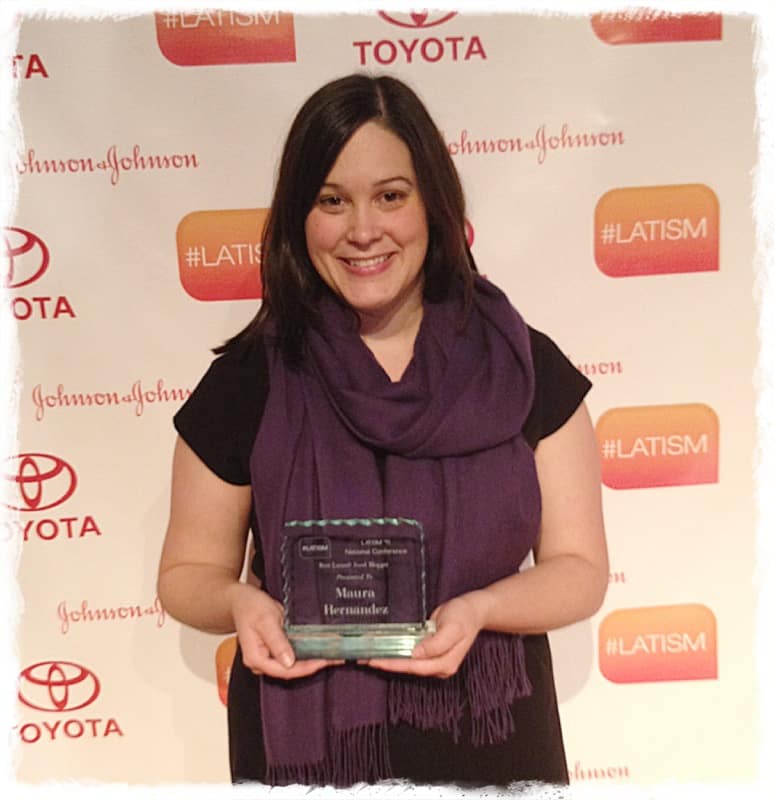
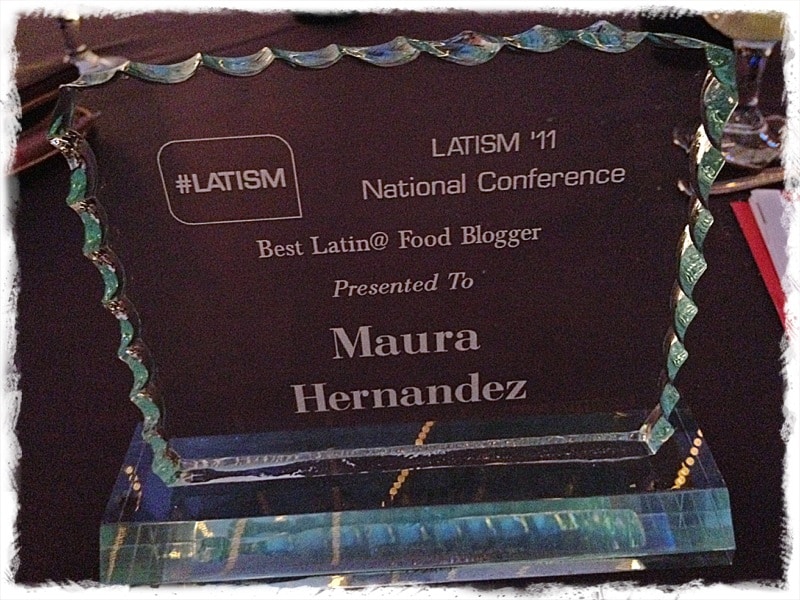
We have some very exciting news to share! This past weekend in Chicago, I attended the LATISM (Latinos in Social Media) National Conference and was awarded Best Latin@ Food Blogger for my work on The Other Side of The Tortilla!

Thank you to each and every one of you voted! It was truly an honor to receive this award. Many of you who have been reading since the beginning know that I launched the social presence of this blog during a Thursday night #latism chat in 2009 after months of tweeting photos of all kinds of Mexican goodies coming from my kitchen. Since day one, it has been nothing but love and encouragement from everyone in the LATISM family and this award means so much to me.

Special thanks also to the LATISM board of directors, especially founder Ana Roca Castro and VP of communications Elianne Ramos for their unwavering support and also inviting me to speak at the conference about niche blogging. I had an amazing time spending two days listening to captivating speakers, making connections within the community and catching up with old friends, and I will definitely be attending LATISM12 in Houston next year. I go to a lot of conferences, but this was undoubtedly one of the best I have ever been to.

Thank you, my incredible readers, friends, fans and family, for your continued support, love and allowing me into your homes and kitchens. It has been an amazing journey so far, and I hope you'll not only continue to join me here for recipes, cultural knowledge and travel tips, but that you'll also share the site with your family and friends, too.
Thank you to the brands and sponsors who have believed in what I'm doing here on The Other Side of The Tortilla and have given me constant opportunities to widen my audience and share my recipes with more people to educate them about Mexican cuisine and culture.

Most importantly, thank you to my husband for pushing me to start the blog during those initial moments of hesitation before hitting publish, always supporting what I do (no matter how crazy it may seem) and being my chief taste-tester.

I hope you'll continue to follow along here, find The Other Side of The Tortilla on Facebook, follow me @MauraHernandez on Twitter, or any of the other places online I hang my hat. It's been a dream come true to share my passion with all of you since 2009 and I look forward to sharing even more in the coming year with expanded content and partnerships.

Un abrazo a todos,



Celebrating Día de Los Muertos

11 · Nov 2, 2011 · 13 Comments

¡Feliz Día de Los Muertos!

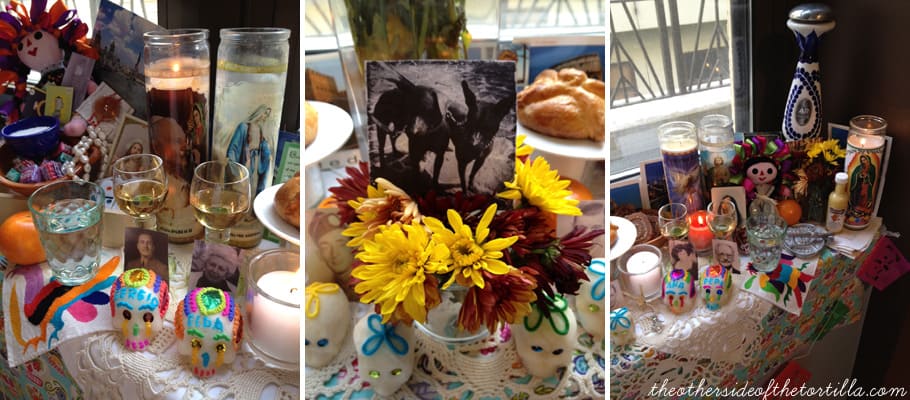
Today is a day to celebrate the lives of our deceased loved ones. We keep the tradition alive in our house by constructing an altar to honor them, and leaving ofrendas—offerings—to entice the souls home.

You can visit my Día de Los Muertos post from last year if you'd like to see the altar we made in 2010.

This holiday goes back more than 3,000 years to the time of the Aztecs. Originally, it was celebrated in the ninth month of the Aztec calendar (what is now August). When the conquistadores arrived from Spain and felt the month-long celebrations of Día de Los Muertos mocked death, and being that they wanted to convert the native people to honor their own religion, they tried to put a stop to the ritual. But they were met with resistance and instead, the ritual was moved to coincide with the Christian calendar's All Saints Day (Nov. 1) and All Souls Day (Nov. 2).

Today, many who celebrate this holiday use el Día de Todos los Santos to honor deceased children and Día de Los Muertos for honoring adults. There is no wrong way to do it, though, and you can honor whomever you like on both days if you wish. In some places in Mexico, families visit cemeteries, clean and decorate grave sites and leave their ofrendas there. Many families, like ours, build an altar in their home.

There's also no wrong way to make an altar—there are common methods (constructing three levels) and typical ofrendas (offerings that represent earth, wind, water and fire), but the point is that you make the altar personal and meaningful to you to honor your deceased loved ones.

I haven't talked about it here on the blog, but in September, José's last living grandparent, my suegro's mother, passed away in Aguascalientes. Abuelita Ana was 91 years old, and we flew to Mexico to be there with family for the velatorio and entierro. It has been a sad time for our family, but being together with everyone in Mexico made it a little easier. This year our altar is especially dedicated to her memory.

It was difficult when I was going through photos trying to decide which photo of her to use, but definitely therapeutic in a way once I was finished. This year, I even purchased special sugar skulls for my ofrenda from the famous Mondragon family of Toluca; they are one of less than a dozen families in Mexico still dedicated to the art form of alfeñique, and you can read more about them on my post from the other day.

To me, el Día de Los Muertos is one of the most beautiful and meaningful holidays not only in Mexico, but in the world. Tomorrow, I'll share more about the individual elements on my altar and what they mean, but for today, just a few photos and a short video so you can check it out.

[youtube]http://www.youtube.com/watch?v=loSmJckBfYc[/youtube]

  • What do you leave as ofrendas on your altar de muertos?

Calaveritas de Mondragon para Día de Los Muertos

7 · Oct 31, 2011 · 10 Comments

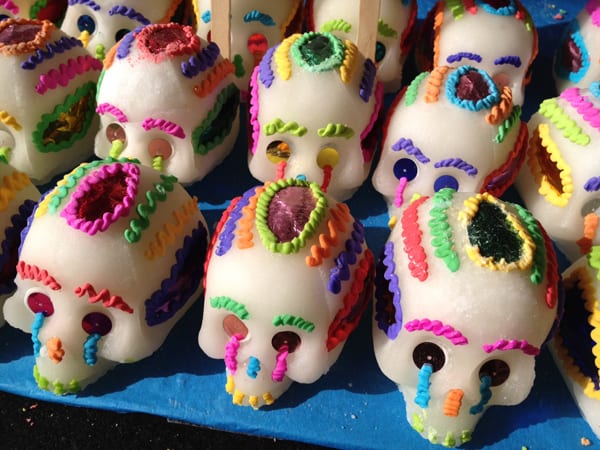
I recently visited the National Museum of Mexican Art, located in the Pilsen neighborhood of Chicago, on a special mission: I was hoping to buy calaveras de azúcar for my altar de muertos. But not just any calaveras—I was hoping to buy handmade and hand-decorated calaveras from the famous Mondragon family.

Sugar skulls are truly an art form and the Mondragon family from Toluca, Mexico, has been making hand-decorated sugar skulls for around 150 years, spanning five generations. They've been coming to the museum to make them in Chicago since 1995 as a way for people to hang on to their culture so far from home and to share Mexican tradition and culture, they told me.

Sugar skulls are often used as a decoration for an altar de muertos or given as gifts for Día de Los Muertos. It's common to also put the names of family members on the forehead of the sugar skull. Some families only put names of the deceased, while others put names of the living on them as well.

Alejandro Mondragon Arriaga and his wife Elvira Garcia Zinzu travel with one of their daughters to Chicago to make their famous sugar skulls at the museum every year while the rest of the family stays behind in Mexico to make them there. Their family is one of less than a dozen left who are dedicated to this traditional craft, Elvira told me. At one time, she said, there were dozens and dozens of families who made them and sold them all over Mexico....

Read More

Muralismo Mexicano: “El Pueblo a la Universidad y la Universidad al Pueblo”

9 · Oct 25, 2011 · 5 Comments

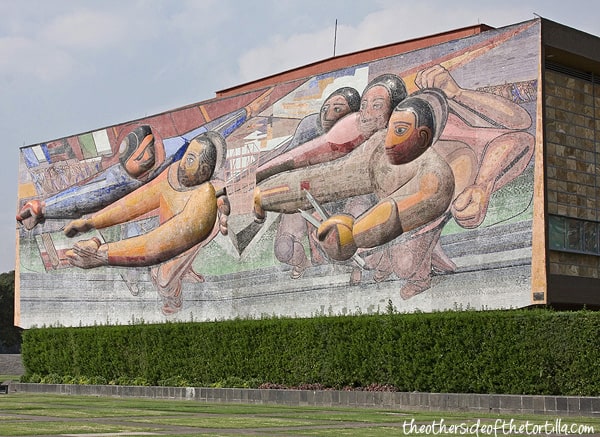
A few years ago on a trip to Mexico City, I had the pleasure of working with the United Nations Educational, Scientific and Cultural Organization (UNESCO) at the Universidad Nacional Autónoma de México (UNAM) to document photos of the campus for a UNESCO project. If you're not familiar with UNAM, the university is the oldest in the Americas (it was founded in 1551) and its main campus (Ciudad Universitaria) is recognized as a World Heritage site by UNESCO. This is definitely a cool place to visit if you travel to Mexico City.

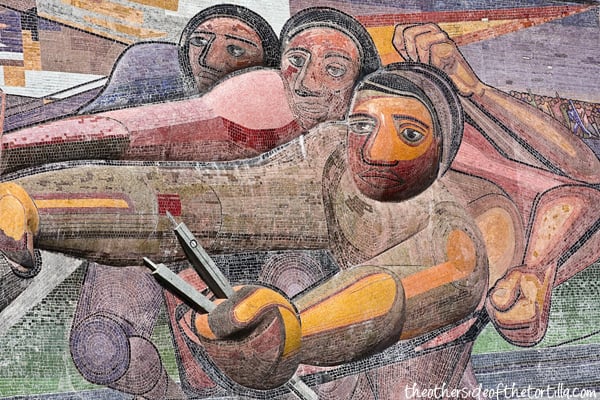
One of my favorite things about the campus is the amount of public art incorporated into both the buildings and open spaces. And I especially love the murals created by some of Mexico's most famous artists.

During my visit, I got to spend some time up close to one of the murals that I'd only before ever seen in photographs—“El Pueblo a la Universidad y la Universidad al Pueblo” by David Alfaro Siqueiros on the side of the Torre de Rectoría....

Read More

Mexican Candy: Fruta cristalizada

19 · Oct 19, 2011 · 2 Comments

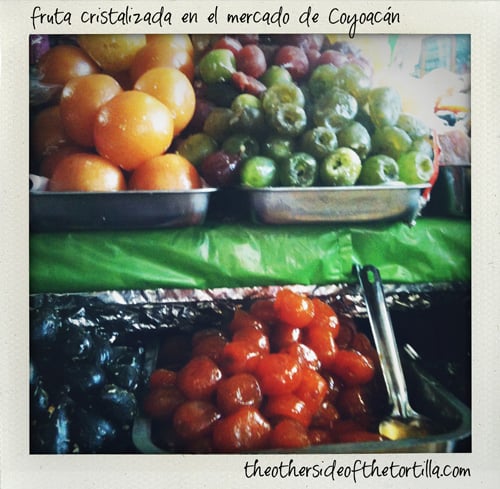
I've always been fascinated by frutas cristalizadas (candied fruits). I spotted these in the Mercado de Coyoacán a few weeks ago during my visit to Mexico City. Pictured clockwise from left: naranjas (oranges) that were hollowed out, tunas verdes y rojas (green and red prickly pears), chabacanos (apricots) and higos (figs). My favorite kind is calabaza cristalizada (candied pumpkin), and I brought back a big piece that I don't plan to share.

  • What's your favorite kind of fruta cristalizada?
  • « Go to Previous Page
  • Page 1
  • Interim pages omitted …
  • Page 50
  • Page 51
  • Page 52
  • Page 53
  • Page 54
  • Interim pages omitted …
  • Page 83
  • Go to Next Page »

Primary Sidebar

¡Bienvenidos!


Hi, I'm Maura Hernández, an award-winning food and travel writer, recipe developer, and former journalist sharing my passion for all things Mexico. I've traveled Mexico extensively over the last 18 years and Mexico City is my home away from home. Here, you'll find a mix of traditional and modern Mexican cooking, along with my advice on where to eat, stay and play on your visit to Mexico!

More about me

Paletas

  • Berries and cream popsicles are a mixed-berry spin on the traditional Mexican fresas con crema dessert. Recipe via theothersideofthetortilla.com
    Moras con Crema Popsicles
  • How to make strawberry hibiscus popsicles via theothersideofthetortilla.com
    Strawberry hibiscus popsicles
  • Mangonada popsicles displayed on a cookie sheet
    Mangonada popsicles
  • How to make banana, chia and coconut milk popsicles. This recipe is dairy-free and vegan-friendly! Via theothersideofthetortilla.com
    Banana chia popsicles
  • Mango cantaloupe and chile powder paletas from The Other Side of The Tortilla
    Mango cantaloupe paletas with chile powder
  • #Vegan fudge #popsicles made with avocado, raw cacao powder, coconut sugar and coconut milk. Get more #recipes from theothersideofthetortilla.com #paletas #receta #recipe
    Vegan avocado fudge pops

Footer

↑ back to top

About

  • Privacy Policy
  • Disclaimer

Contact

  • Contact Me
  • Media Kit
  • FAQ

As an Amazon Associate, I earn from qualifying purchases.

Copyright © The Other Side of The Tortilla, 2009-2024